1947 – 2027
80 Years of Ferrari
Eighty years since the first Ferrari, the 125 S of 1947.
Maranello · 1947
01Enzo Ferrari
12 March 1947
In 2027 Ferrari marks 80 years since 12 March 1947, when the first car to carry Enzo Ferrari’s name first ran. Enzo had raced for Alfa Romeo, and the Scuderia he founded in 1929 ran the Alfa Romeos that won the 1000 Miglia five years in a row.
80
Years since the first Ferrari
5
1000 Miglia wins in a row for the Scuderia, 1933–37
8
1000 Miglia victories for Ferrari, 1948–57
12
Overall wins at Le Mans, 1949–2025
021898 – 1947
Before the first car
Enzo Ferrari as a driver and team manager, 1919 to 1947.
18 February 1898
Born in Modena
Enzo Ferrari is born in Modena; his birth was registered two days later, on 20 February.
1919
First race
He makes his competition debut in the Parma–Poggio di Berceto hill climb at the wheel of a CMN, finishing fourth in his class.
1920 – 1924
Alfa Romeo works driver
Ferrari joins Alfa Romeo’s racing department in 1920. Victory at the Circuito del Savio near Ravenna in 1923 brings a meeting with the parents of the fallen air ace Francesco Baracca, and the suggestion that he adopt their son’s prancing horse; the Coppa Acerbo at Pescara follows in 1924. Across his career he started 41 Grands Prix and won 11.
16 November 1929
Scuderia Ferrari
The Scuderia is founded in Modena with capital of 200,000 lire to buy and race Alfa Romeo competition cars. Its first race is the 1930 1000 Miglia.
1932
The prancing horse appears
The cavallino, now black on a Modena-yellow shield, first runs on the Scuderia’s Alfa Romeos at the Spa 24 Hours. The birth of his son Dino that year brings Enzo’s own driving career to a close.
1933 – 1937
Five 1000 Miglia wins in a row
Running Alfa Romeo’s racing on the factory’s behalf from 1933, Scuderia Ferrari wins the 1000 Miglia five years running: Nuvolari (1933), Varzi (1934), Pintacuda (1935), Brivio (1936) and Pintacuda again (1937).
1938 – 1939
Alfa Corse, and a parting
Alfa Romeo buys 80 per cent of the Scuderia at the end of 1937 and absorbs it as Alfa Corse, with Ferrari retained to run it. He leaves in 1939 and founds Auto Avio Costruzioni in Modena, barred by agreement from using his own name on a racing car for four years.
28 April 1940
The 815
Two Auto Avio Costruzioni 815s, with 1.5-litre straight-eight engines and Touring bodies, start the Gran Premio Brescia delle Mille Miglia, driven by Alberto Ascari and Lotario Rangoni. Rangoni leads his class by more than half an hour before retiring; neither car finishes.
1943
To Maranello
The workshops move from Modena to Maranello, where the factory is bombed in November 1944 and February 1945 before being rebuilt as Auto Costruzioni Ferrari.
12 March 1947
The first Ferrari
The Colombo-designed V12 of the 125 is fired up for the first time, in a chassis not yet bodied. The 125 S makes its debut at Piacenza on 11 May, retiring from the lead, and on 25 May Franco Cortese wins the Rome Grand Prix: Ferrari’s first victory.
031947 – 2026
The cars
Eighteen key models, from the 125 S to the Luce, with three facts on each.
Chapter I: 1947 – 1967
The racing years
From the first V12 to the sports-prototypes built to beat Ford.
1947
125 S
The first car to carry Enzo Ferrari’s name, and the winner of his first race as a constructor.
- Engine
- 1.5-litre (1,497cc) Colombo V12
- Power
- 118hp at 6,800rpm
- Landmark
- Rome Grand Prix winner, 25 May 1947
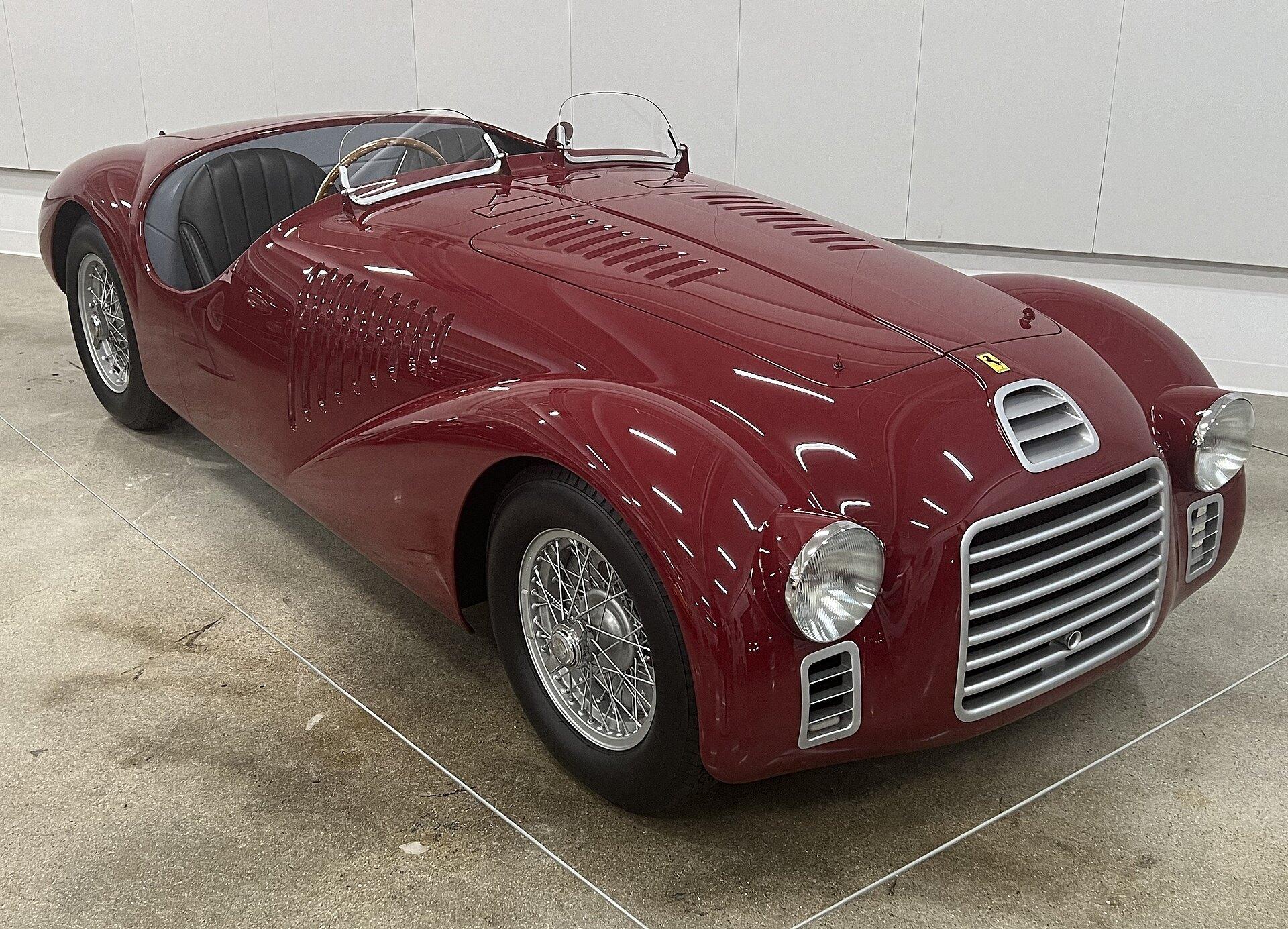
A 125 S at the Petersen Automotive Museum, Los Angeles. Photo: TaurusEmerald · CC BY-SA 4.0 · Wikimedia Commons 1948
166 MM
In Touring barchetta form, the car that gave Ferrari its first Le Mans win and its second 1000 Miglia in the same season.
- Engine
- 2.0-litre (1,995cc) V12
- Power
- 140hp at 6,600rpm
- Landmark
- 1949 winner of the 1000 Miglia and Le Mans
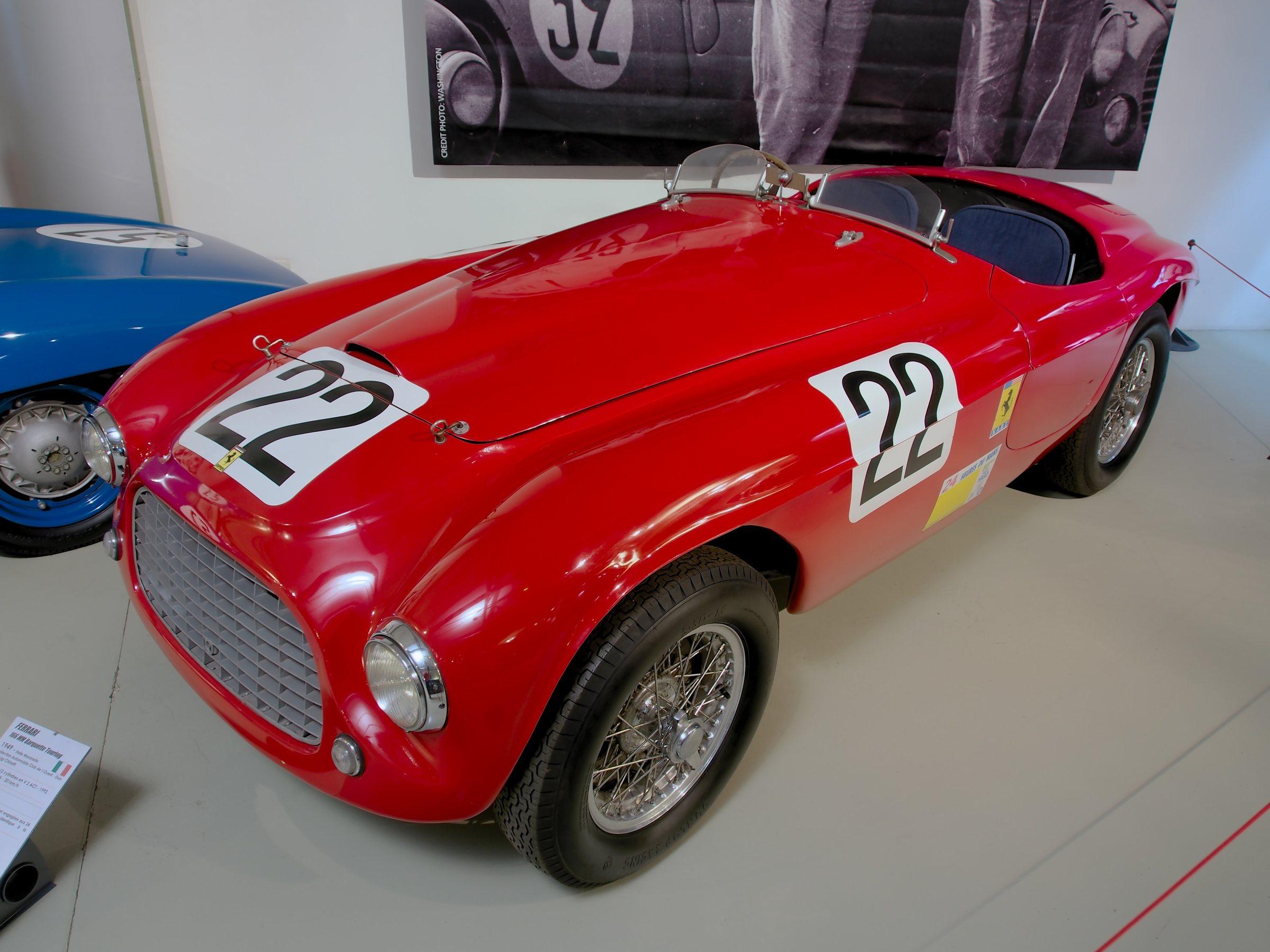
The 1949 Le Mans-winning 166 MM, Musée des 24 Heures du Mans. Photo: Alf van Beem · Public domain · Wikimedia Commons 1957
250 Testa Rossa
Named for its red cam covers, the sports-racer behind three Le Mans wins and three world sports car titles.
- Engine
- 3.0-litre (2,953cc) V12
- Power
- 300hp at 7,200rpm
- Landmark
- Le Mans winner 1958, 1960 and 1961; 33 built
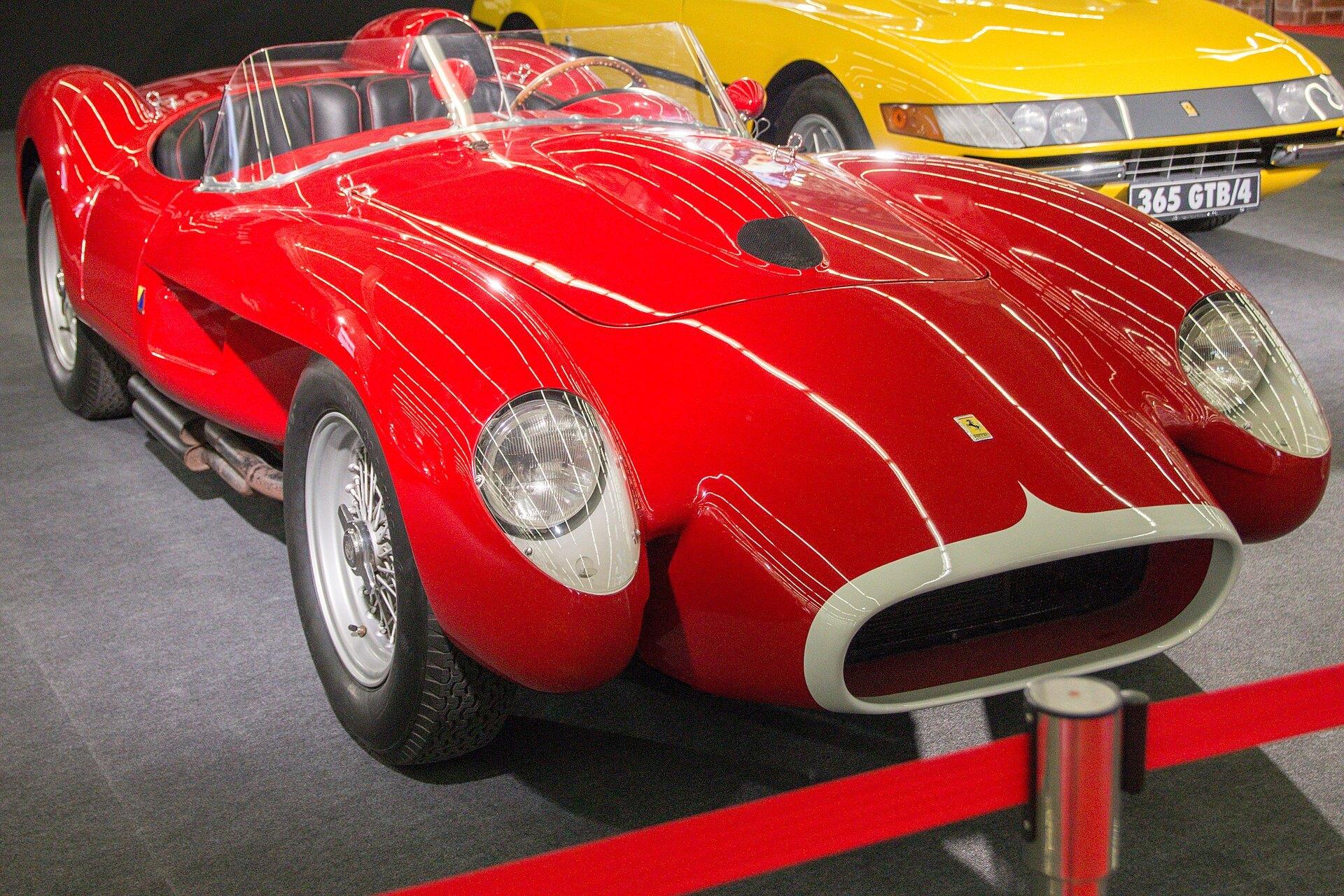
A 250 Testa Rossa with pontoon front wings, IAA Frankfurt, 2019. Photo: Johannes Maximilian · CC BY-SA 4.0 · Wikimedia Commons 1962
250 GTO
A front-engined GT racer, built in tiny numbers to win the GT manufacturers’ championship.
- Engine
- 3.0-litre (2,953cc) V12
- Power
- 300hp at 7,400rpm; 280km/h
- Landmark
- GT class titles 1962, 1963 and 1964; 36 built by the usual count
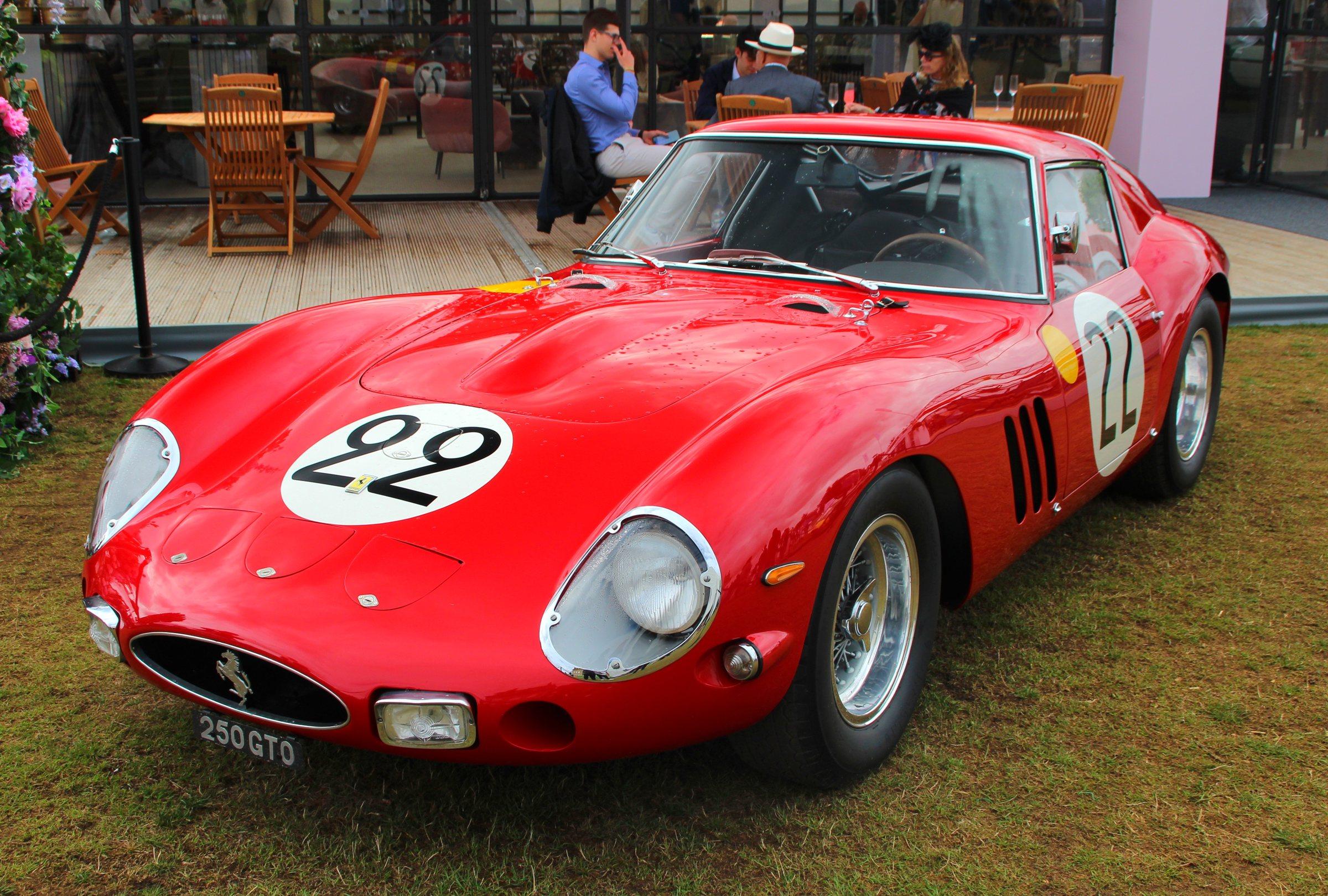
A 250 GTO in period racing colours. Photo: Calreyn88 · CC BY-SA 4.0 · Wikimedia Commons 1964
275 GTB
The first road-going Ferrari with a rear transaxle and independent rear suspension.
- Engine
- 3.3-litre (3,286cc) V12
- Power
- 280hp at 7,600rpm
- Production
- 442 built, 1964–66
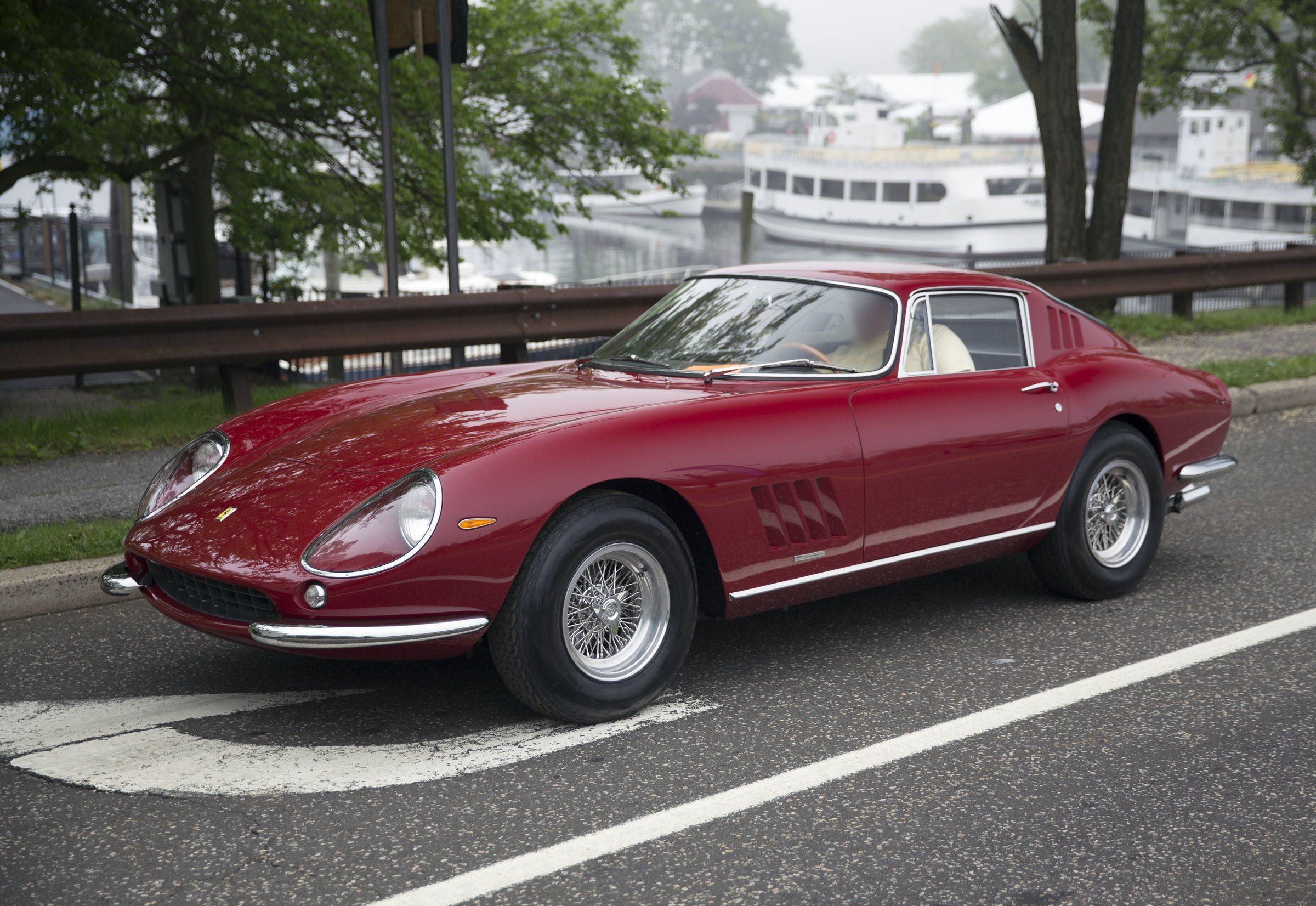
A 1966 275 GTB at the Greenwich Concours. Photo: Mr.choppers · CC BY-SA 3.0 · Wikimedia Commons 1967
330 P4
Ferrari’s answer to Ford’s Le Mans victory of 1966, leading a Ferrari one-two-three at Daytona in February 1967.
- Engine
- 4.0-litre (3,967cc) mid-mounted V12
- Power
- 450hp at 8,000rpm
- Landmark
- Daytona 24 Hours and Monza 1000km winner; four built
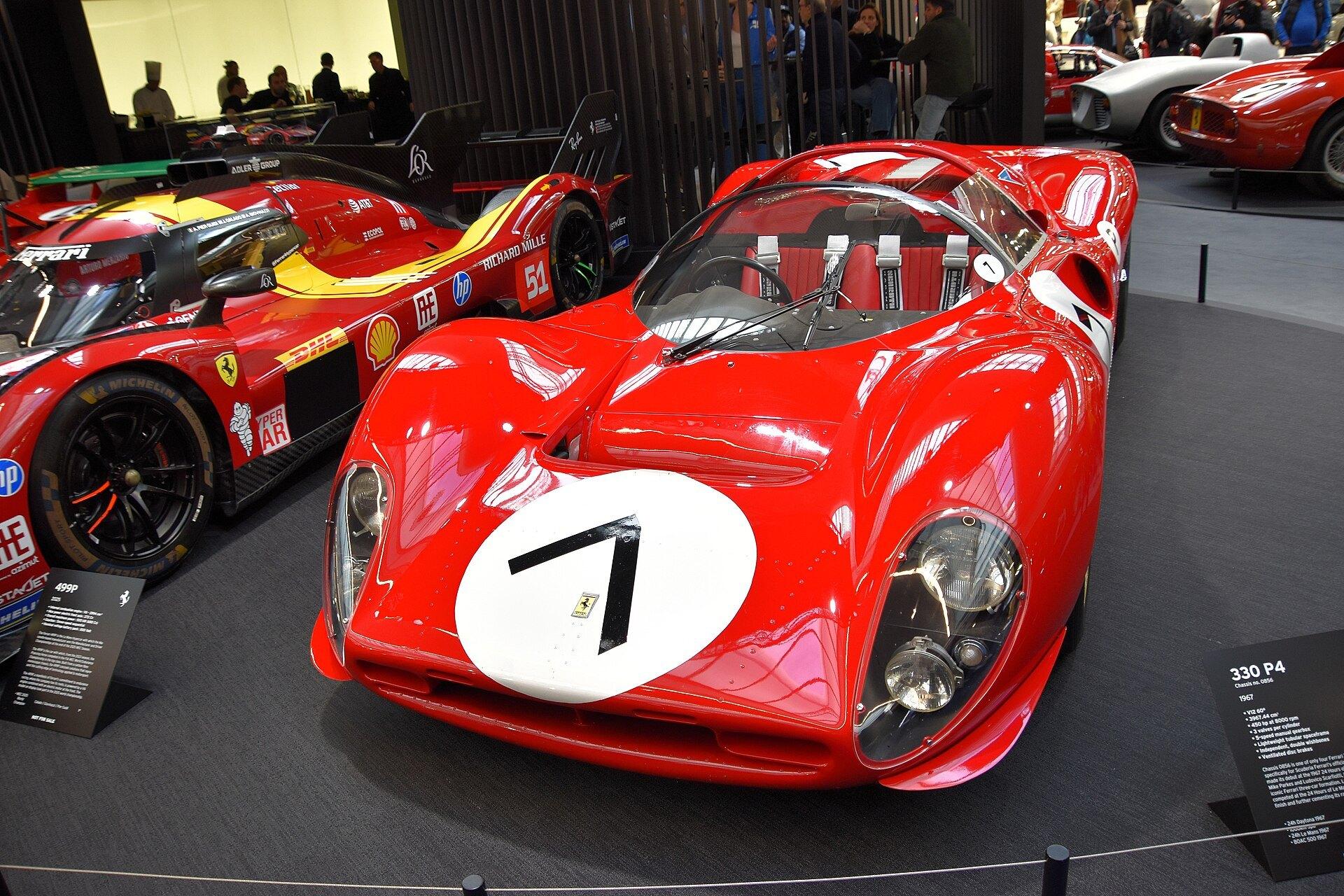
A 330 P4 on display, a 499P beside it. Photo: Charles from Port Chester, New York · CC0 · Wikimedia Commons
Chapter II: 1968 – 1995
Berlinettas and supercars
Front-engined V12s and mid-engined V8s for the road, and a new kind of car: the limited-series supercar, beginning with the GTO of 1984.
1968
365 GTB/4 ‘Daytona’
The front-engined V12 berlinetta whose unofficial name recalls the 1967 Daytona result.
- Engine
- 4.4-litre (4,390cc) V12
- Power
- 352hp at 7,500rpm; 280km/h
- Production
- c. 1,400 coupés and Spiders
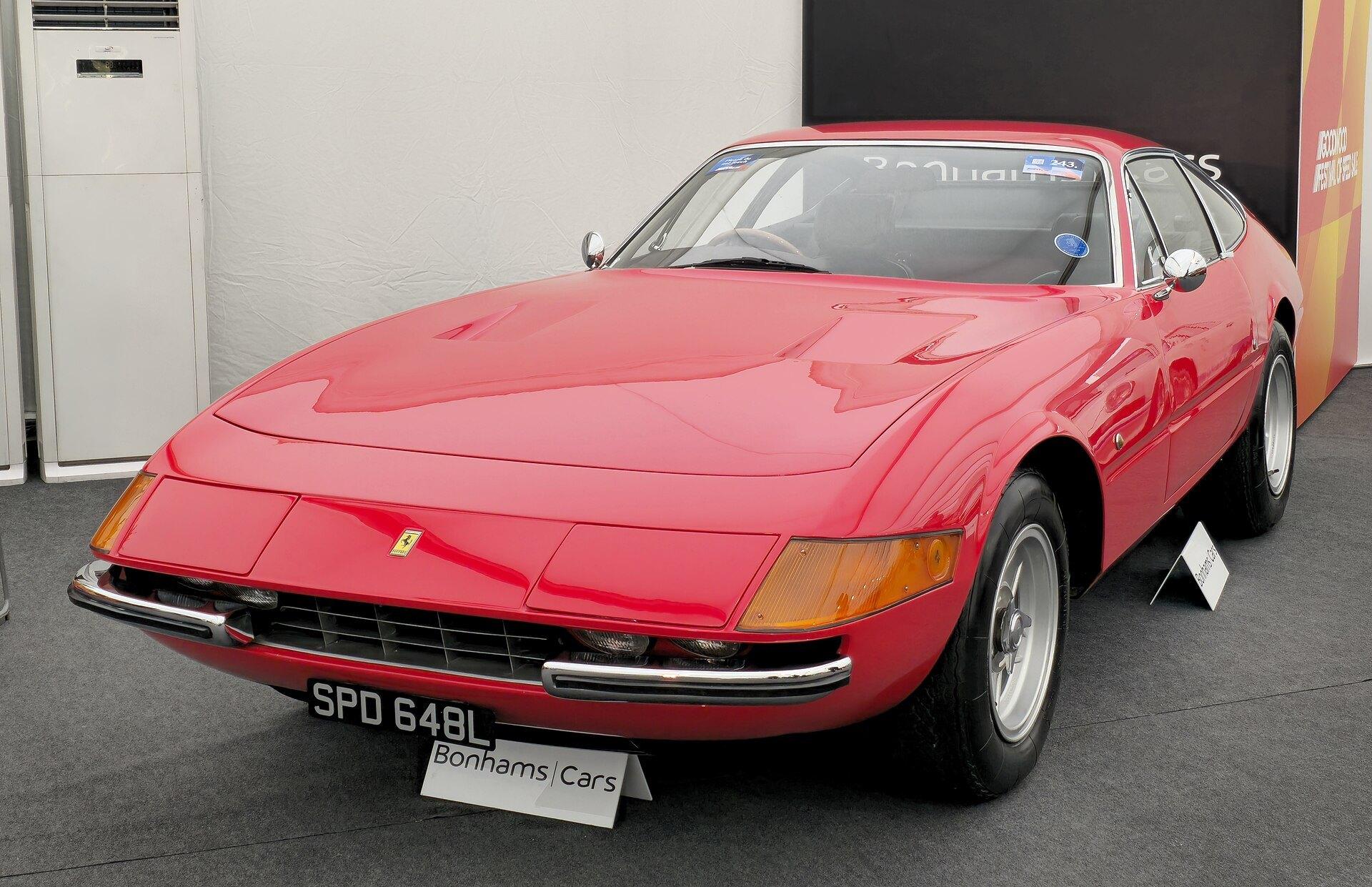
A 365 GTB/4 at Bonhams, Goodwood, 2024. Photo: Calreyn88 · CC BY-SA 4.0 · Wikimedia Commons 1975
308 GTB
Leonardo Fioravanti’s Pininfarina design, which made the mid-engined V8 berlinetta a Ferrari staple.
- Engine
- 2.9-litre (2,927cc) transverse V8
- Power
- 255hp
- Notable
- Early cars bodied in glass fibre: 808 built, to 1977
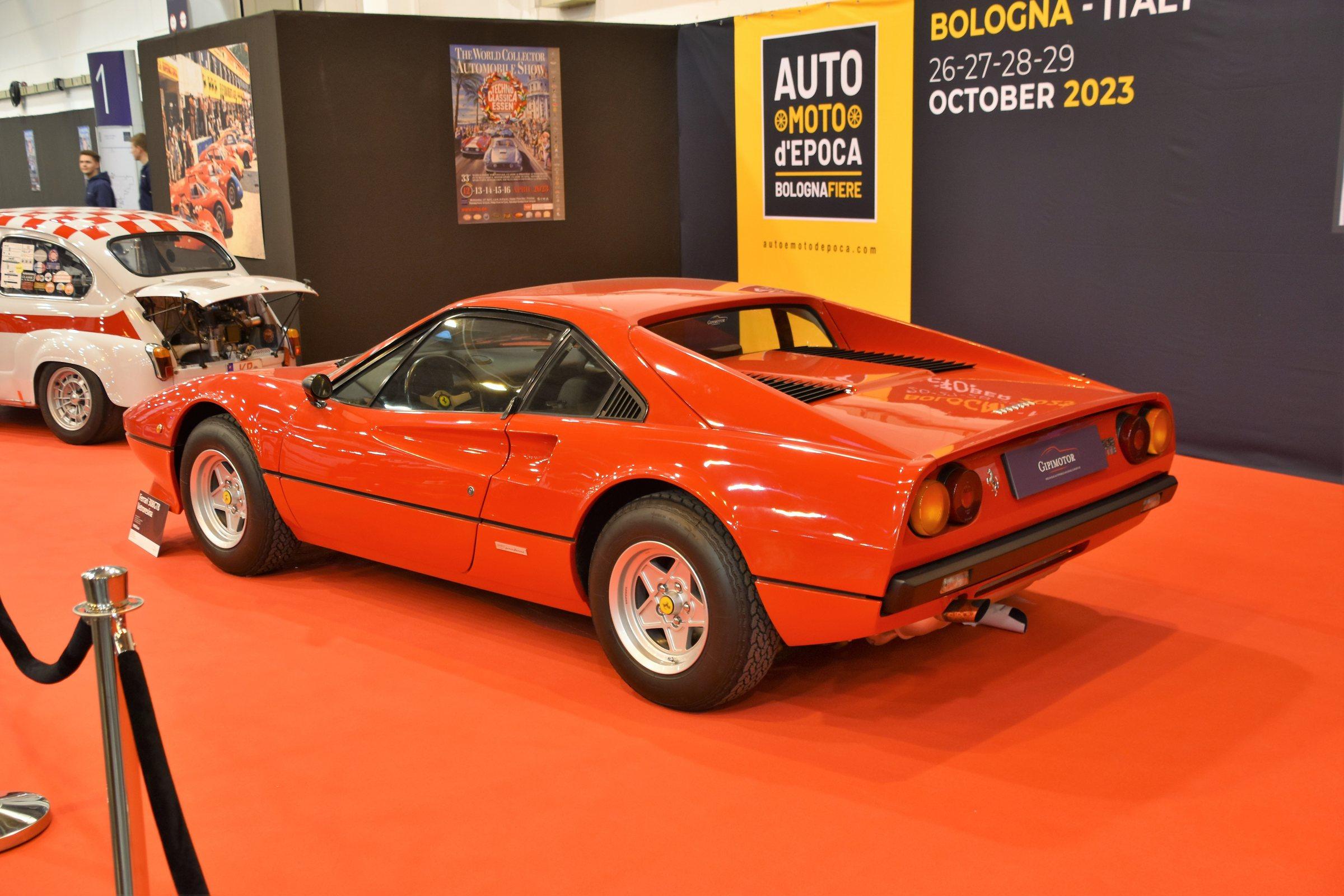
A 1977 308 GTB at Auto e Moto d’Epoca, Bologna. Photo: Charles from Port Chester, New York · CC BY 2.0 · Wikimedia Commons 1984
GTO (288 GTO)
A twin-turbocharged homologation special for Group B, and the first of Ferrari’s limited-series supercars.
- Engine
- 2.9-litre (2,855cc) twin-turbo V8
- Power
- 400hp at 7,000rpm; 305km/h
- Production
- 272 built
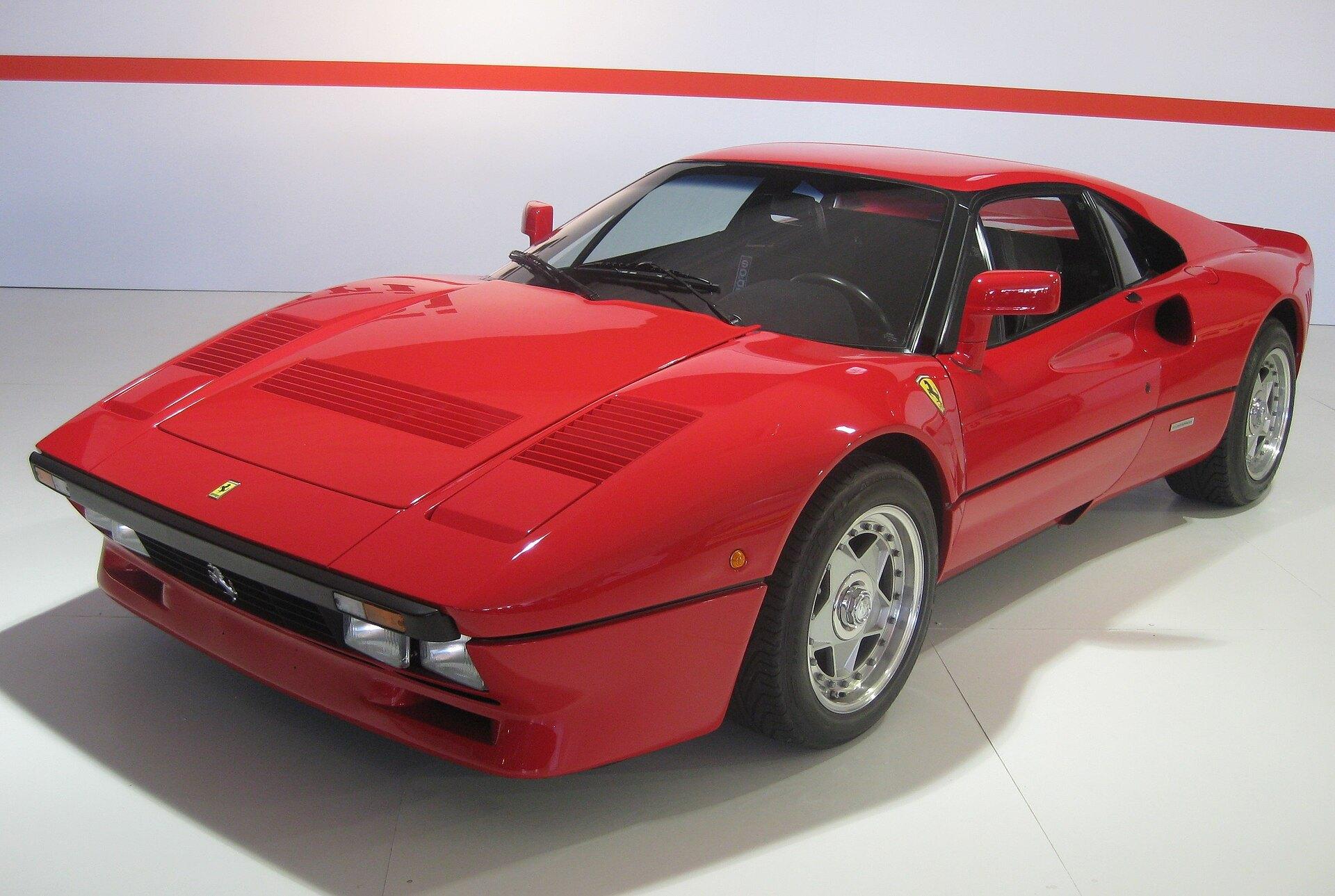
A GTO, better known as the 288 GTO. Photo: GTHO · CC BY-SA 4.0 · Wikimedia Commons 1987
F40
Built for Ferrari’s fortieth anniversary, and the last new model approved by Enzo Ferrari himself.
- Engine
- 2.9-litre (2,936cc) twin-turbo V8
- Power
- 478hp at 7,000rpm; 324km/h claimed
- Production
- c. 1,311 built; unveiled 21 July 1987
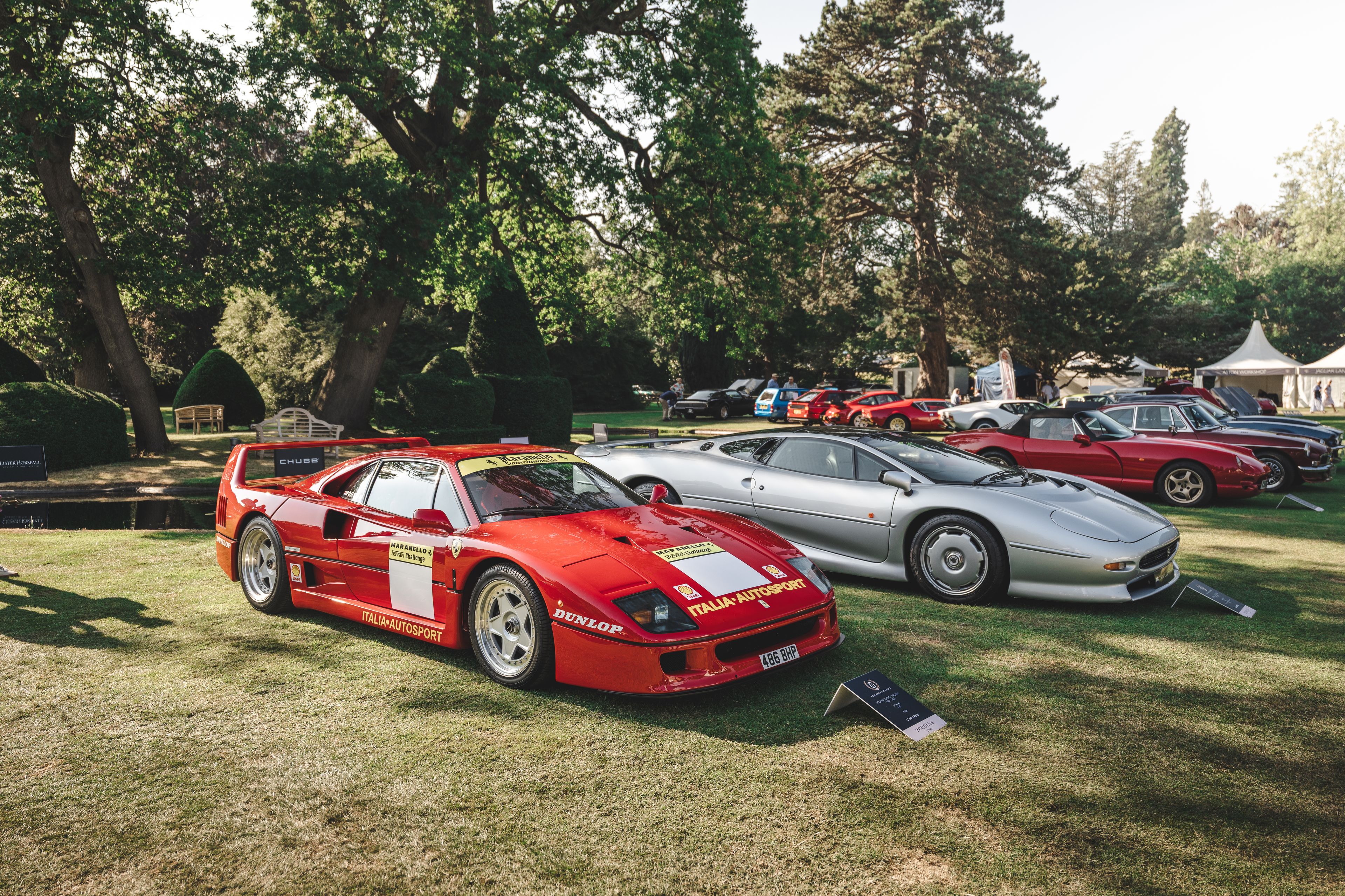
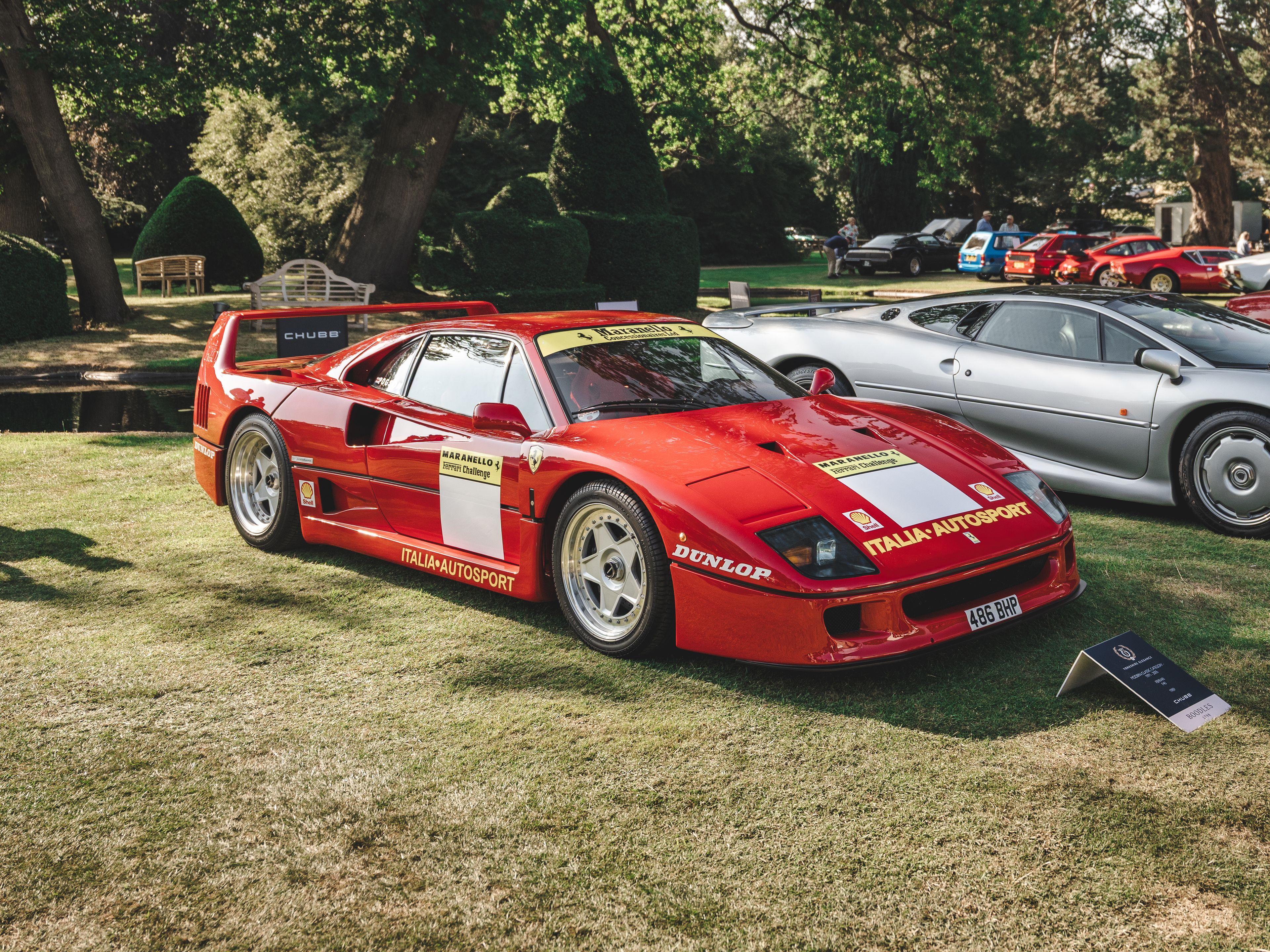
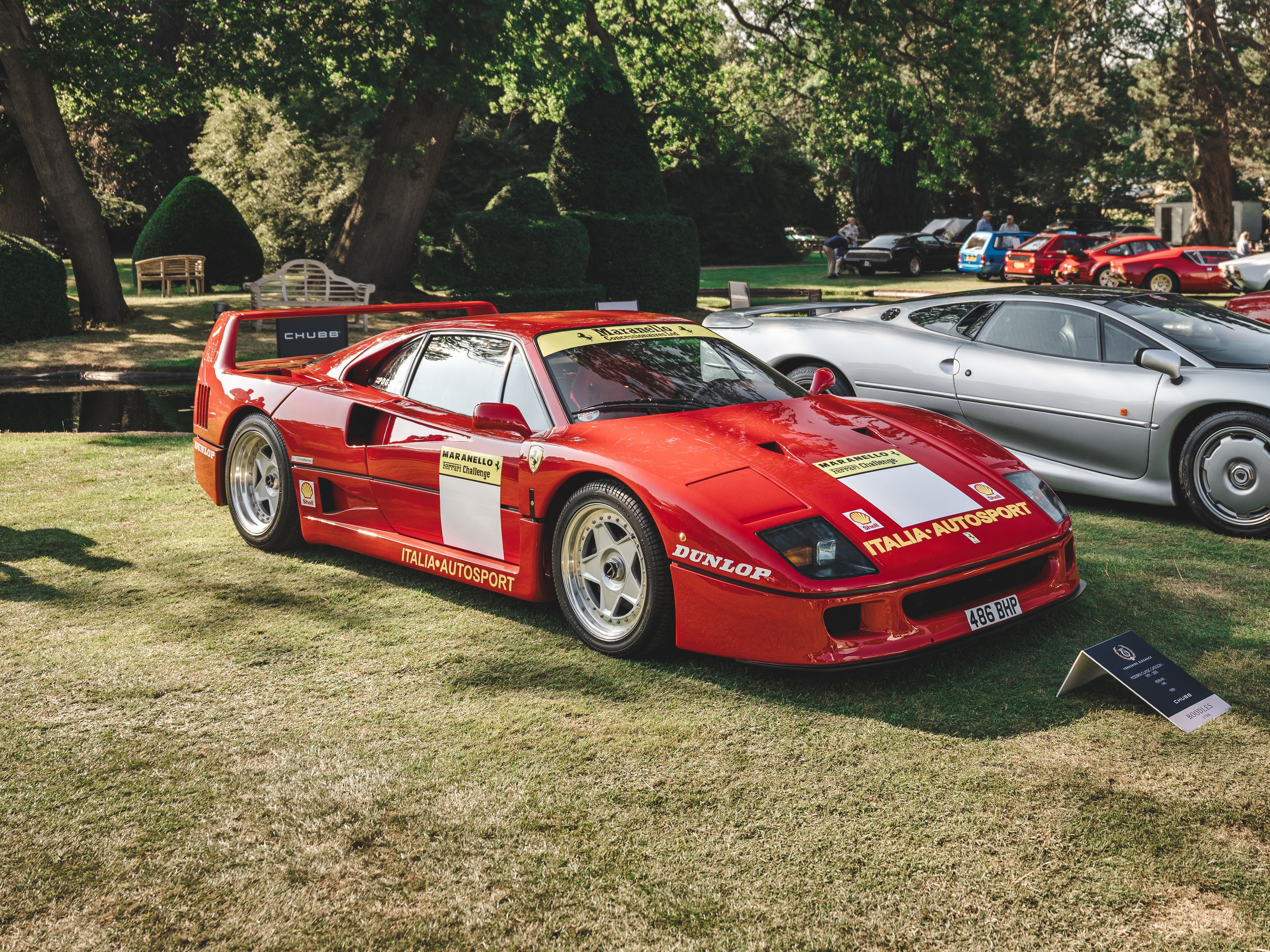
An F40 at Yorkshire Elegance 2026 1995
F50
A road car built around a V12 derived from the engine of Ferrari’s 1990 Formula 1 car, the 641.
- Engine
- 4.7-litre (4,699cc) V12
- Power
- 520hp at 8,500rpm; 325km/h
- Production
- 349 built
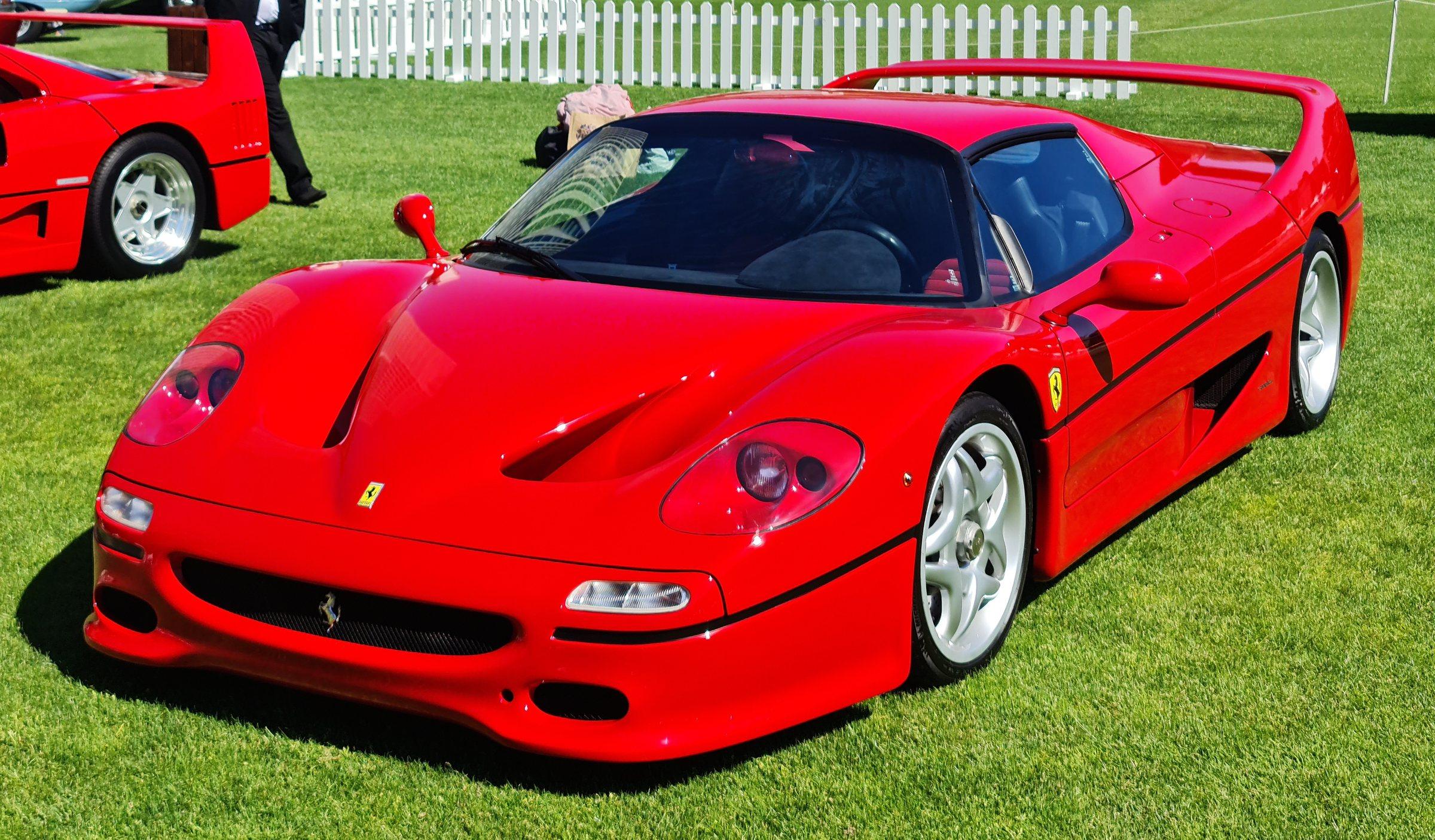
An F50 at the London Concours. Photo: MrWalkr · CC BY-SA 4.0 · Wikimedia Commons
Chapter III: 2002 – 2026
Hybrid power and a new century
Carbon fibre and Formula 1 technology for the road, hybrid power, victory at Le Mans once more and, in 2026, the first electric Ferrari.
2002
Enzo Ferrari
The founder’s namesake, bringing carbon-fibre construction and Formula 1 gearbox technology to the road.
- Engine
- 6.0-litre (5,999cc) V12
- Power
- 660hp at 7,800rpm; over 350km/h
- Production
- 399, plus a 400th presented to Pope John Paul II and sold for charity
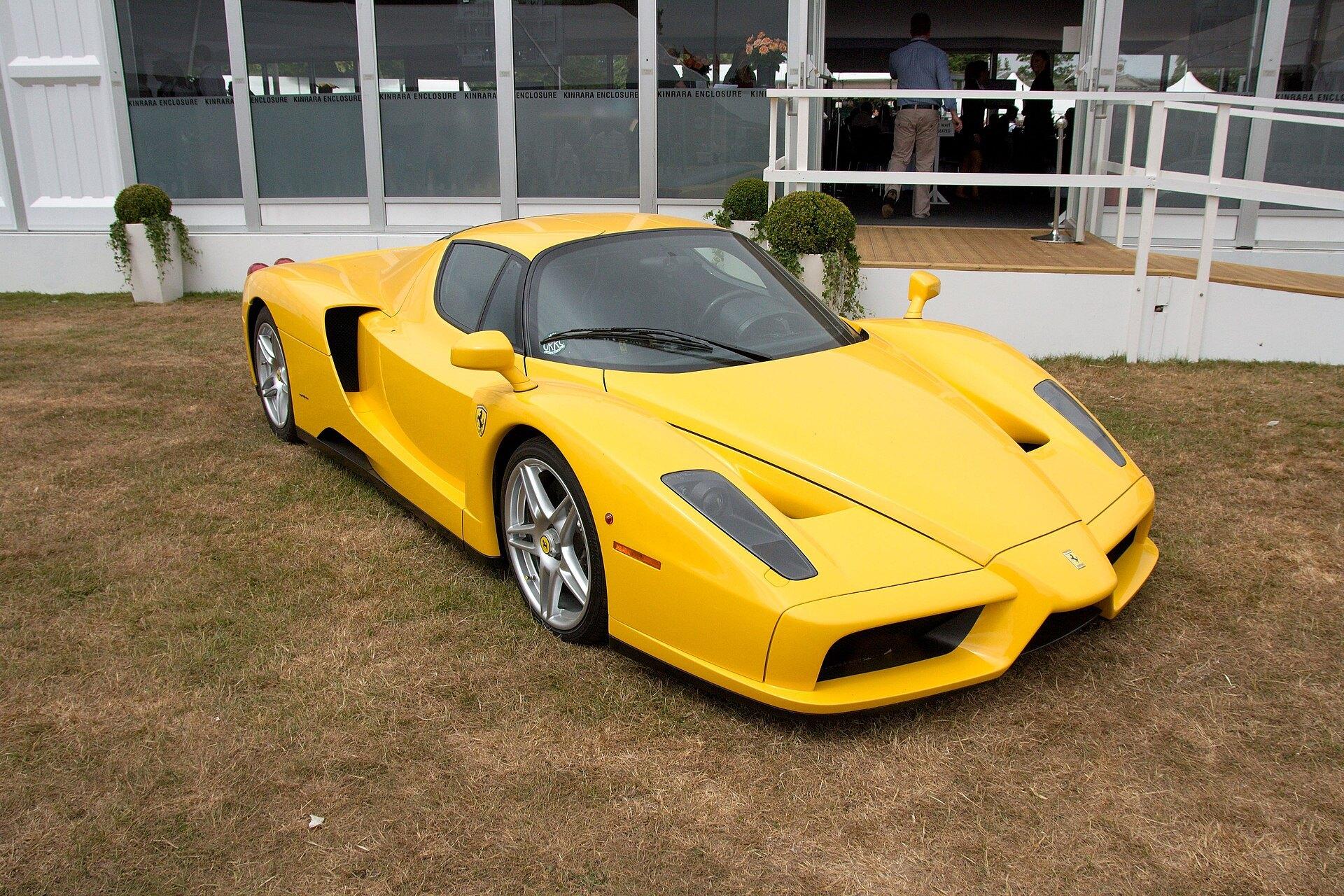
An Enzo Ferrari in yellow. Photo: Andrew Basterfield · CC BY-SA 2.0 · Wikimedia Commons 2013
LaFerrari
Ferrari’s first hybrid road car, pairing a V12 with HY-KERS energy recovery developed from Formula 1.
- Engine
- 6.3-litre (6,262cc) V12 plus electric motor
- Power
- 800cv from the V12; 963cv combined
- Production
- 499 coupés, plus a 500th for earthquake relief
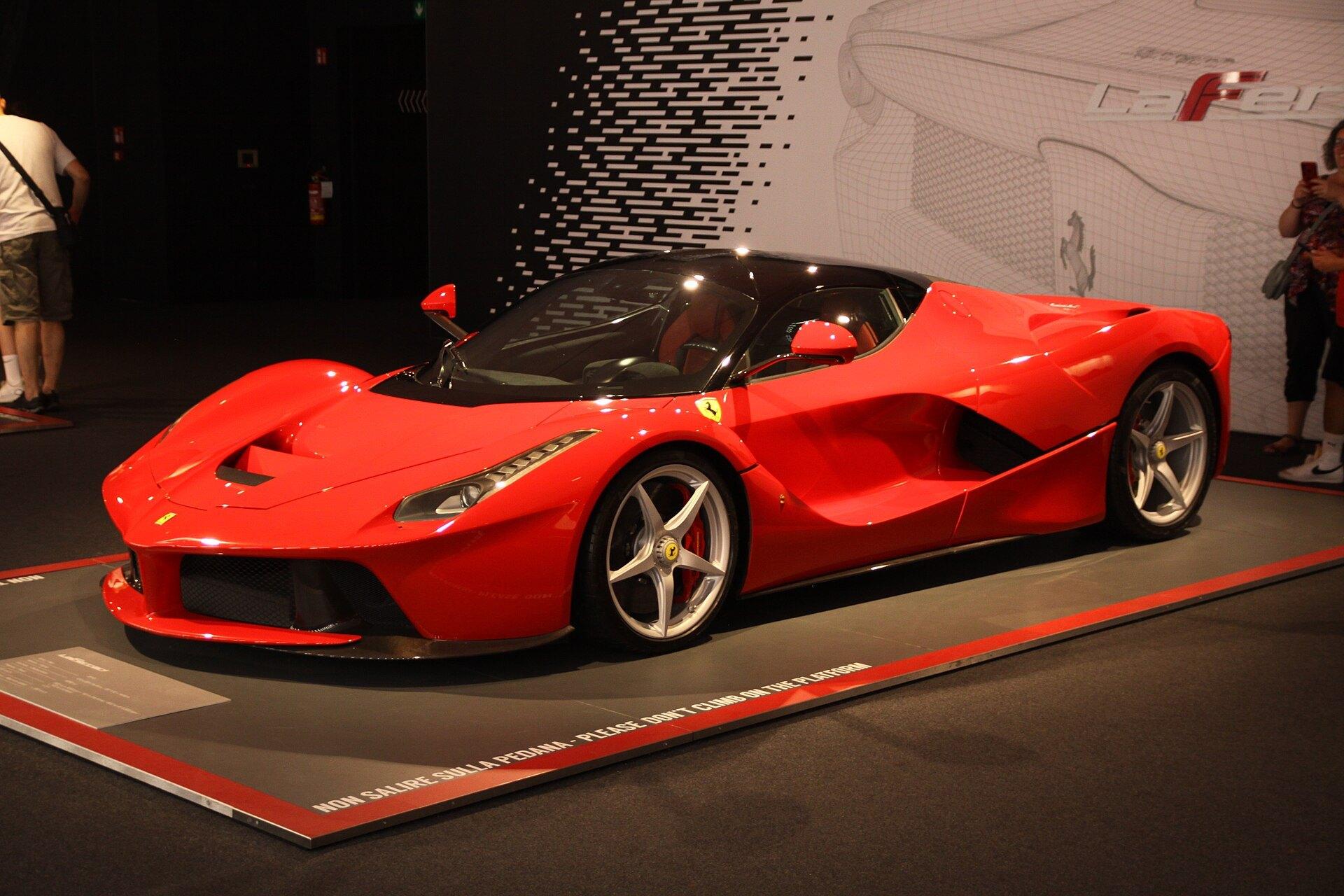
LaFerrari at the Ferrari museum. Photo: Matyáš Solařík · CC BY-SA 4.0 · Wikimedia Commons 2019
SF90 Stradale
The first Ferrari with plug-in hybrid architecture, named for ninety years of the Scuderia.
- Engine
- 4.0-litre (3,990cc) twin-turbo V8 plus three electric motors
- Power
- 1,000cv combined (780cv from the V8)
- Notable
- About 25km of electric-only range; 340km/h
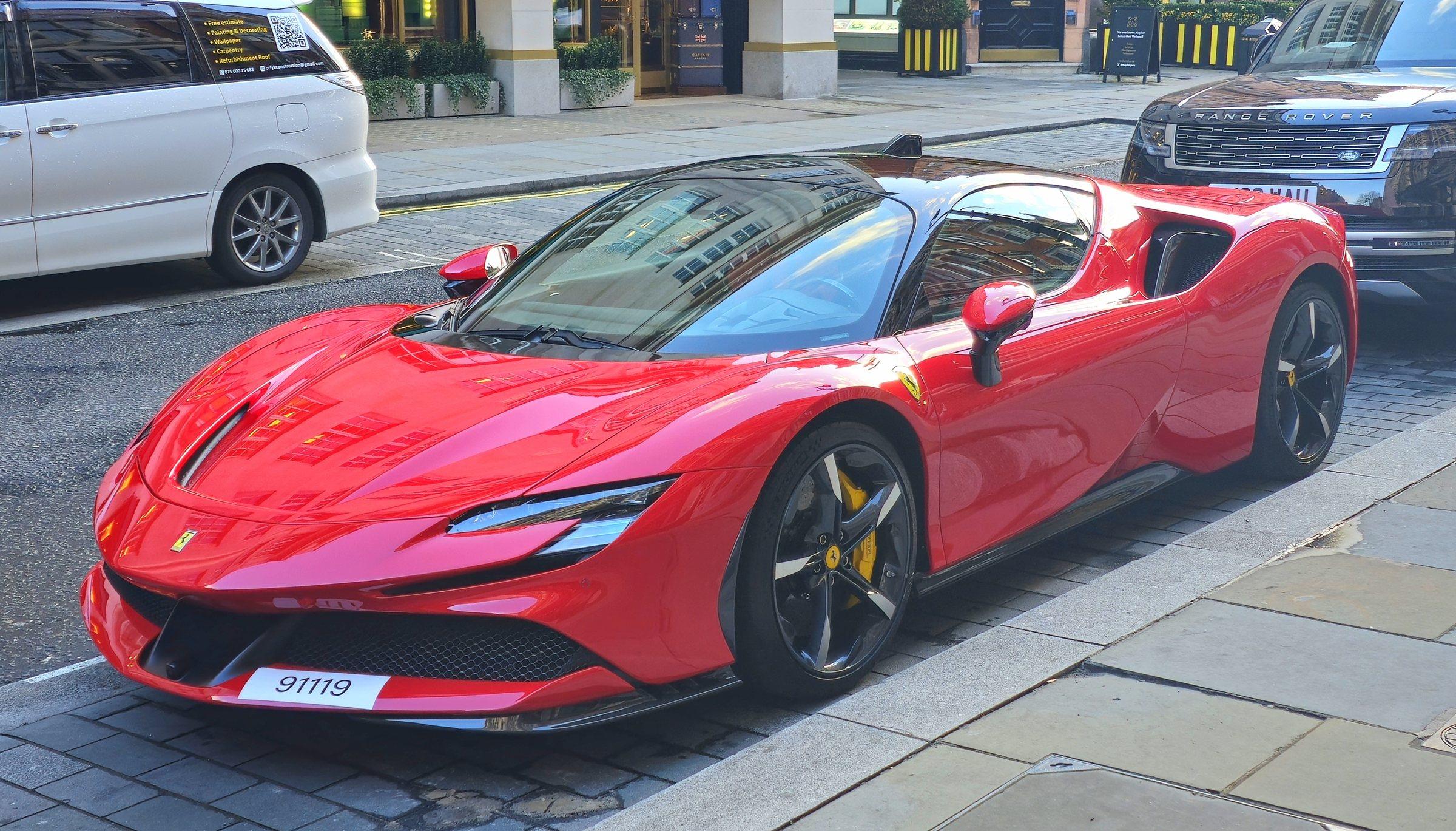
An SF90 Stradale in Mayfair. Photo: Calreyn88 · CC BY 4.0 · Wikimedia Commons 2023
499P
Ferrari’s Le Mans Hypercar, which won the 24 Hours at its first attempt and twice more besides.
- Engine
- 3.0-litre twin-turbo V6 hybrid, four-wheel drive
- Power
- 500kW system output
- Landmark
- Le Mans winner 2023, 2024 and 2025
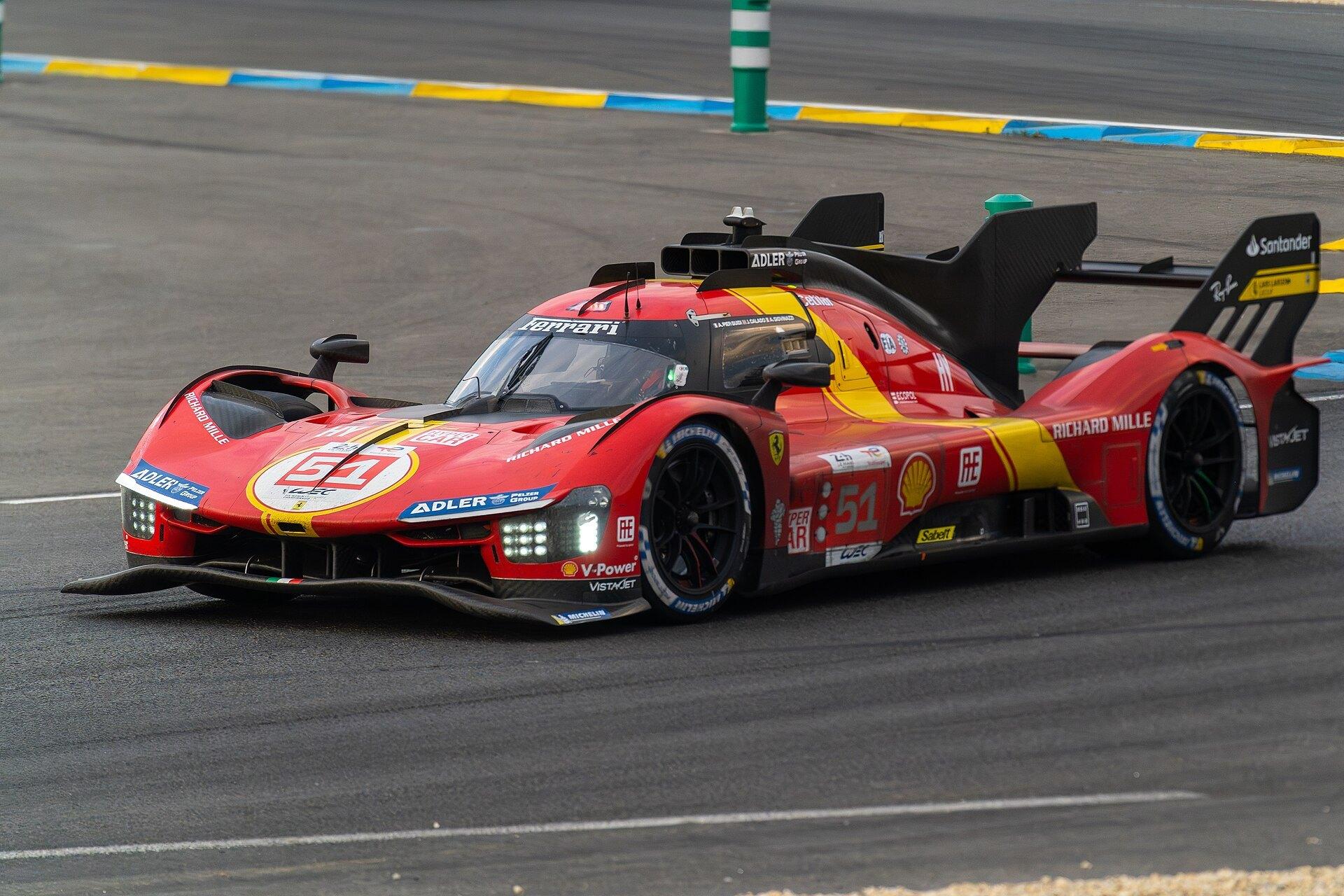
The winning No. 51 499P at Le Mans, 2023. Photo: Wolkenjaeger · CC BY-SA 4.0 · Wikimedia Commons 2024
12Cilindri
A front-engined V12 grand tourer styled after the 365 GTB/4 Daytona.
- Engine
- 6.5-litre (6,496cc) V12
- Power
- 830cv at 9,250rpm
- Notable
- 340km/h; unveiled in Miami, May 2024
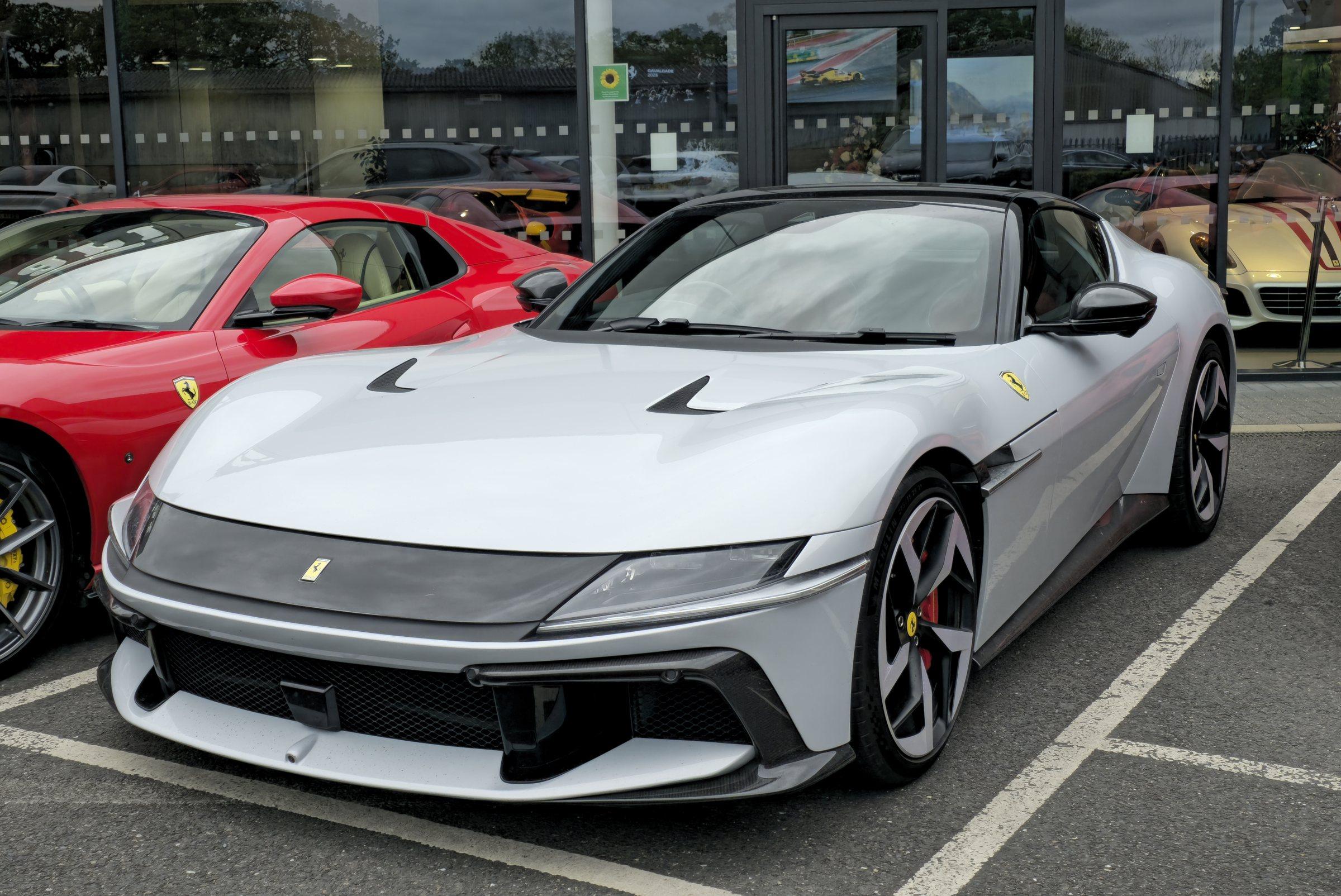
A 12Cilindri in silver. Photo: Calreyn88 · CC BY 4.0 · Wikimedia Commons 2024
F80
The latest limited-series supercar, with a hybrid V6 derived from the Le Mans-winning 499P.
- Engine
- 3.0-litre (2,992cc) twin-turbo V6 plus three electric motors
- Power
- 1,200cv combined (900cv from the V6)
- Production
- 799 units
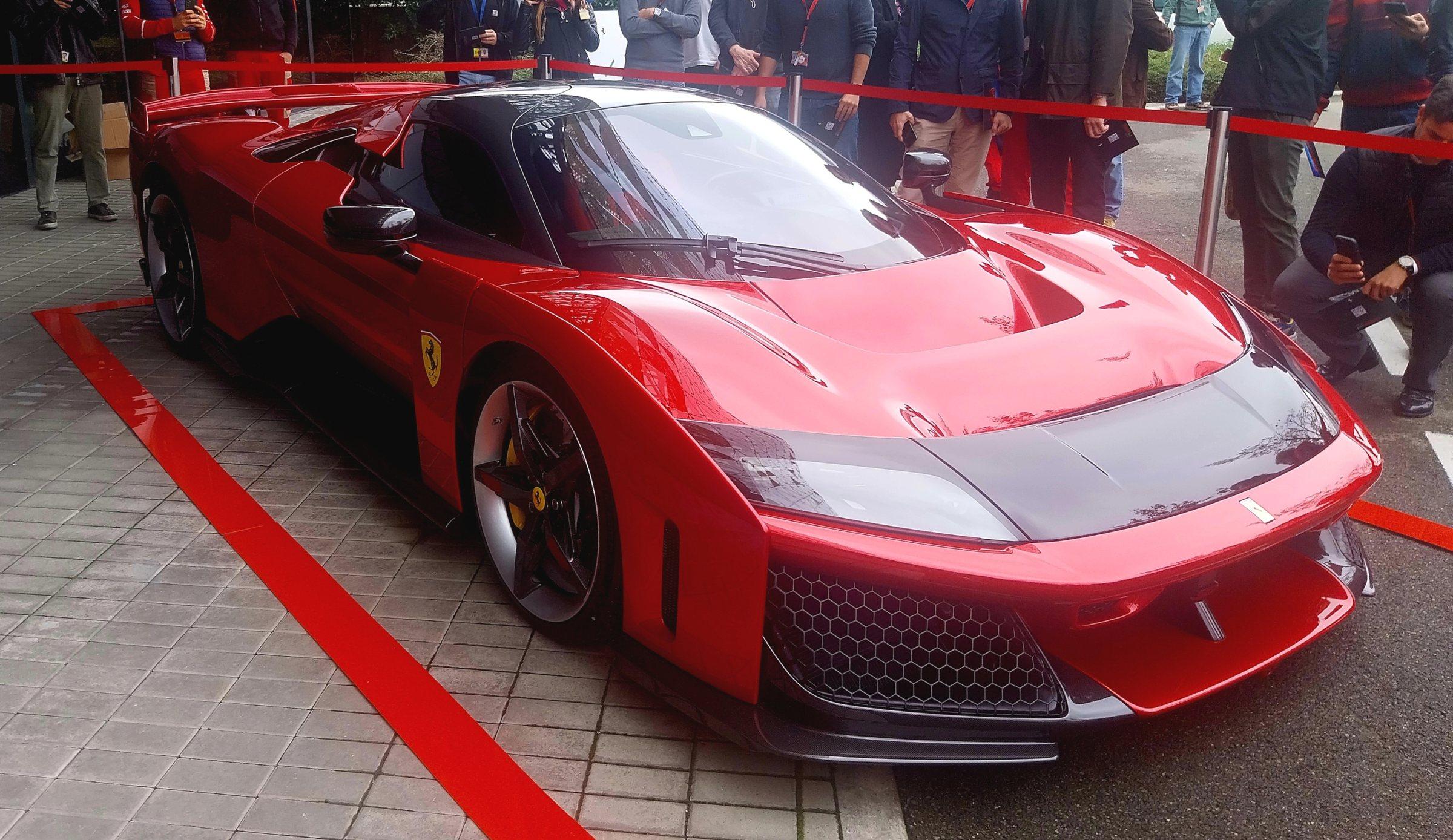
An F80 at Maranello, in front of the Centro Stile. Photo: Asgaw · CC BY 4.0 · Wikimedia Commons 2026
Luce
Ferrari’s first fully electric car and its first five-seater, designed with Jony Ive and Marc Newson’s LoveFrom.
- Drivetrain
- Four electric motors; 122kWh, 800-volt battery
- Power
- More than 1,000cv
- Notable
- c. 530km claimed range; 0–100km/h in 2.5sec
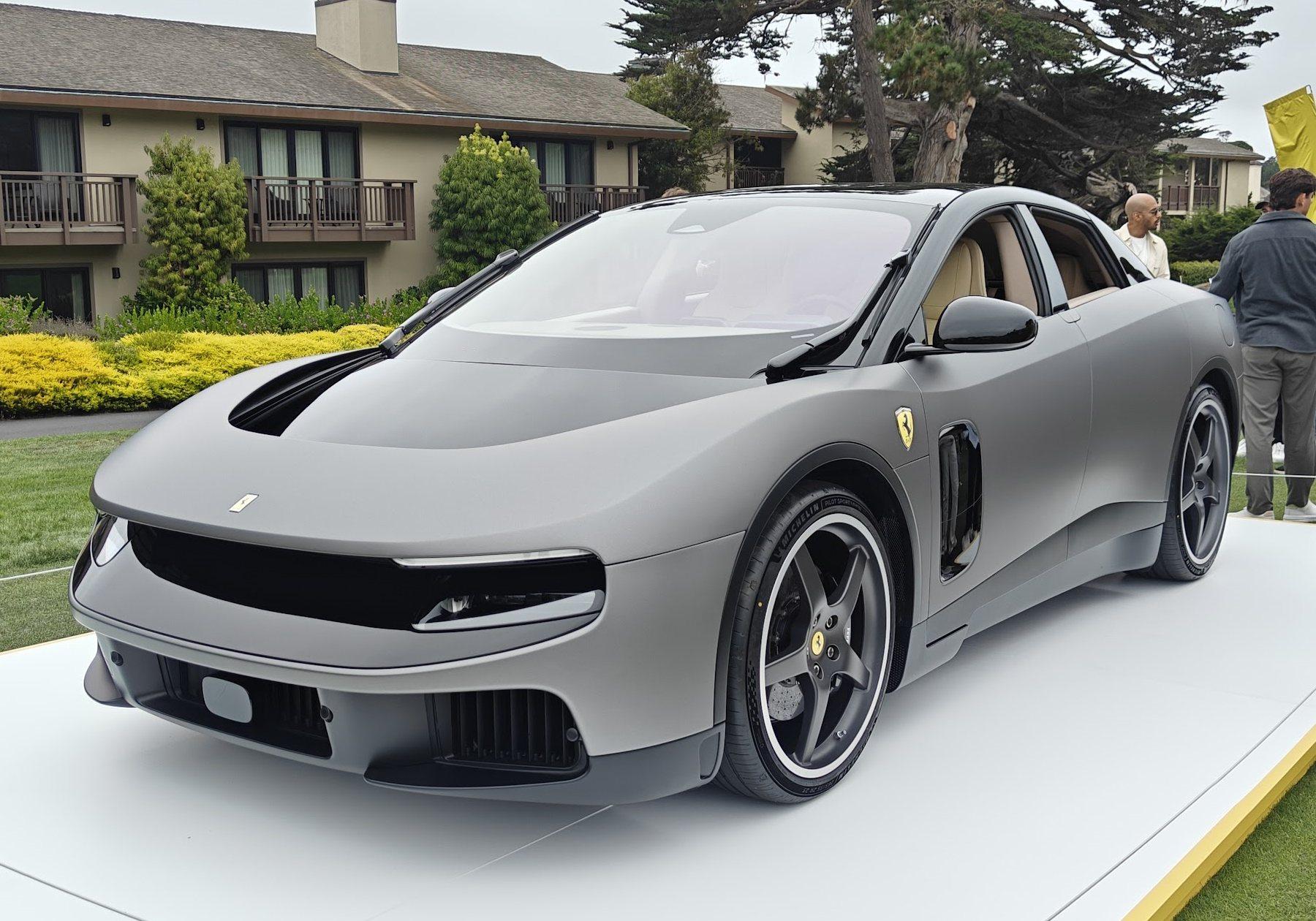
The Luce at Pebble Beach, 2026. Photo: Banhada · CC BY 4.0 · Wikimedia Commons
04Brescia · Le Mans · Formula 1
Race wins
1948
First 1000 Miglia victory
Clemente Biondetti and Giuseppe Navone win in a 166 S coupé, taking 15 hours 5 minutes for the round trip from Brescia.
June 1949
First Le Mans victory
Luigi Chinetti and Lord Selsdon win the 24 Hours in a 166 MM, Chinetti driving for almost twenty-three of them.
14 July 1951
First Formula 1 win
José Froilán González beats the works Alfa Romeos to win the British Grand Prix at Silverstone in a 375 F1, the Scuderia’s first World Championship victory.
1952 – 1953
First World Champion
Alberto Ascari wins six consecutive championship Grands Prix in the four-cylinder 500 F2 and ends 1952 as Ferrari’s first world champion; he retains the title in 1953.
12 May 1957
The last 1000 Miglia
Piero Taruffi’s 315 S wins the final 1000 Miglia run at speed: Ferrari’s eighth victory in the race in ten years.
1960 – 1965
Six in a row at Le Mans
Ferrari wins the 24 Hours six years running; the last, in 1965, falls to the North American Racing Team’s 250 LM of Jochen Rindt and Masten Gregory, the marque’s ninth overall win.
11 June 2023
Back on top at Le Mans
In the race’s centenary year, the 499P of Alessandro Pier Guidi, James Calado and Antonio Giovinazzi gives Ferrari its first overall Le Mans win since 1965.
2024 – 2025
A hat-trick and a world title
The 499P wins again in 2024 and 2025, a third consecutive victory that keeps the Le Mans trophy at Maranello for good. In 2025 Ferrari also takes the World Endurance Championship manufacturers’ and drivers’ titles, its first endurance world crown since 1972.
05Brescia · Rome · Brescia
Ferrari and the 1000 Miglia
Enzo Ferrari’s Scuderia ran the Alfa Romeos that won it every year from 1933 to 1937; his first car of his own, the Auto Avio Costruzioni 815, made its debut in the 1940 edition; and between 1948 and 1957 Ferraris won eight of the ten races, ending with Piero Taruffi’s 315 S in the last of them. Clemente Biondetti’s wins of 1948 and 1949 made him the race’s only four-time victor.
When the event continued as a rally, Ferrari 250 GTs won in 1958, 1959 and 1961. Today Ferraris of every era return to the roads between Brescia and Rome in the Ferrari Tribute 1000 Miglia, which runs alongside the historic event, and the race’s centenary edition in May 2027 falls in Ferrari’s eightieth year.
- 1933–37
- Five wins for Scuderia Ferrari’s Alfa Romeos
- 1940
- The AAC 815 makes its debut
- 1948–57
- Eight Ferrari wins in ten races
- 1958–61
- Three rally wins for the 250 GT
 Also in 2027100 Years of the 1000 Miglia
06Grantley Hall
Ferrari at Yorkshire Elegance
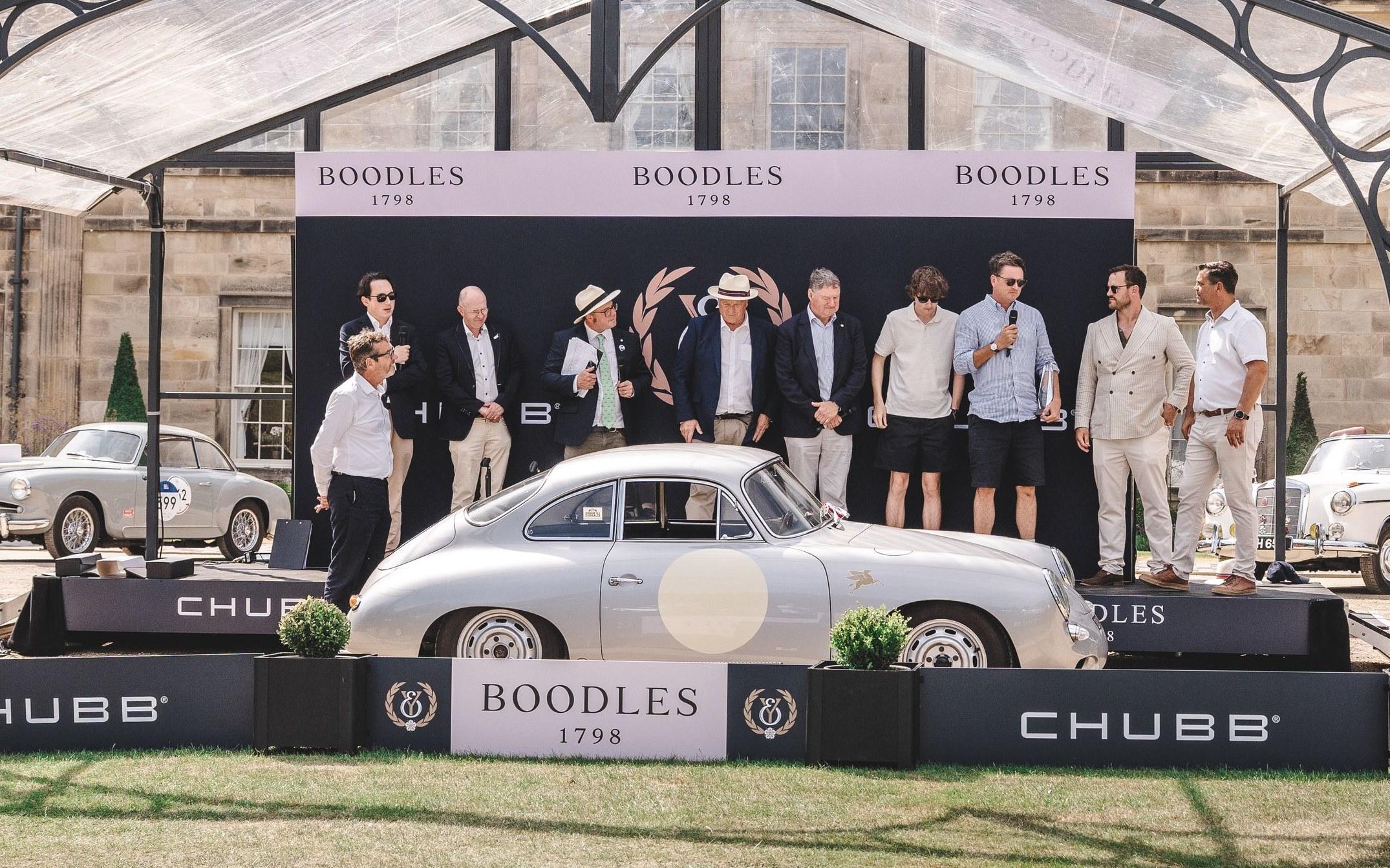
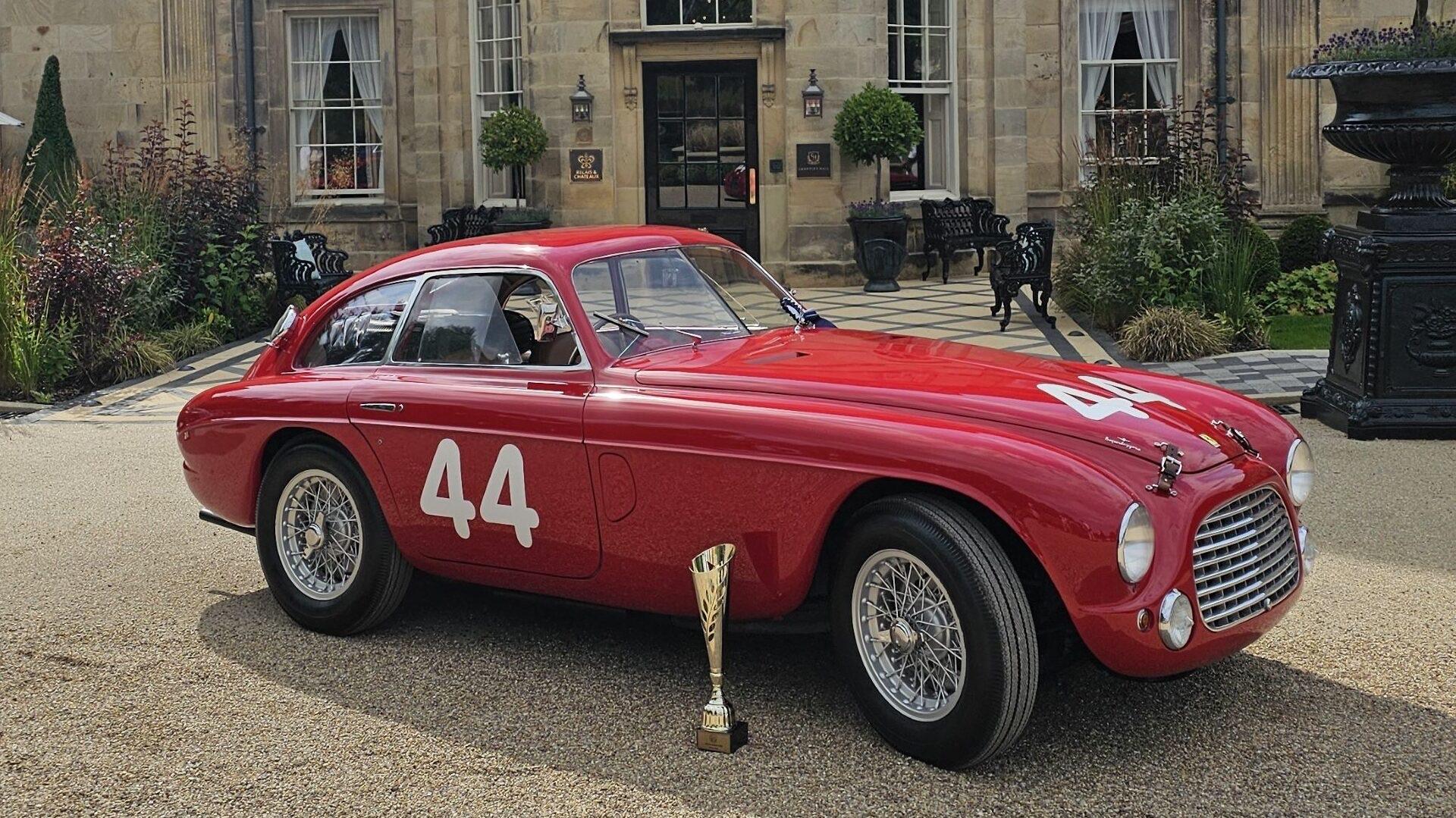
In 2025 a 1964 275 GTB, chassis #1 and the first production right-hand-drive example, was voted Overall Best in Show; a 275 GTS, a 1971 Daytona and a 308 GTS were also on display. In 2026 a 250 GTO was shown and an F40 was presented on stage.
275 GTB, Best in Show 2025
250 GTO, 2026
F40 and Jaguar XJ220, 2026
1947 – 2027
Ferrari at 80
Ferrari has marked its milestones in its own way: in 2017 by re-enacting the 125 S’s first run on 12 March, and in 2022 with a logo for its seventy-fifth year.
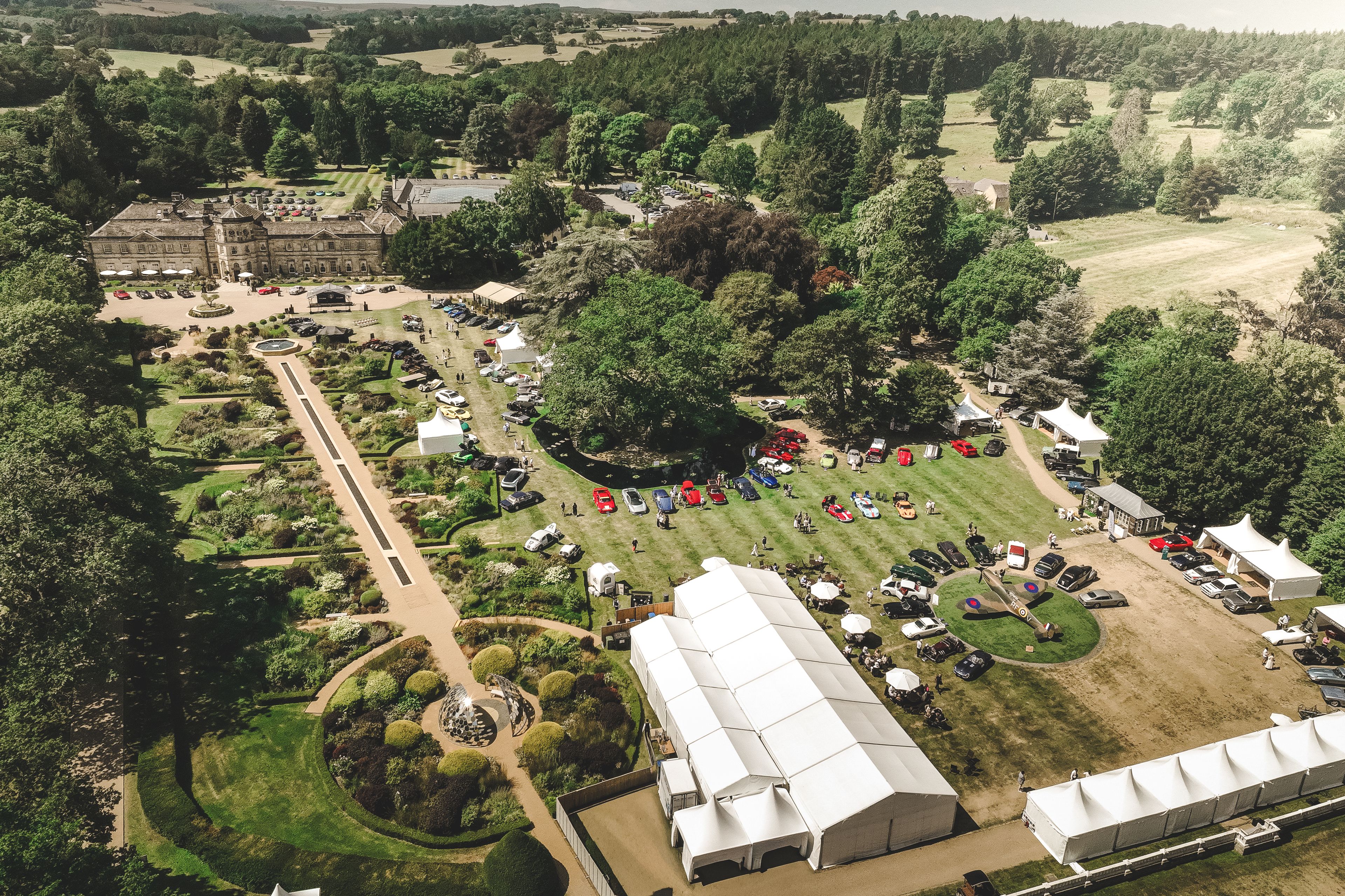
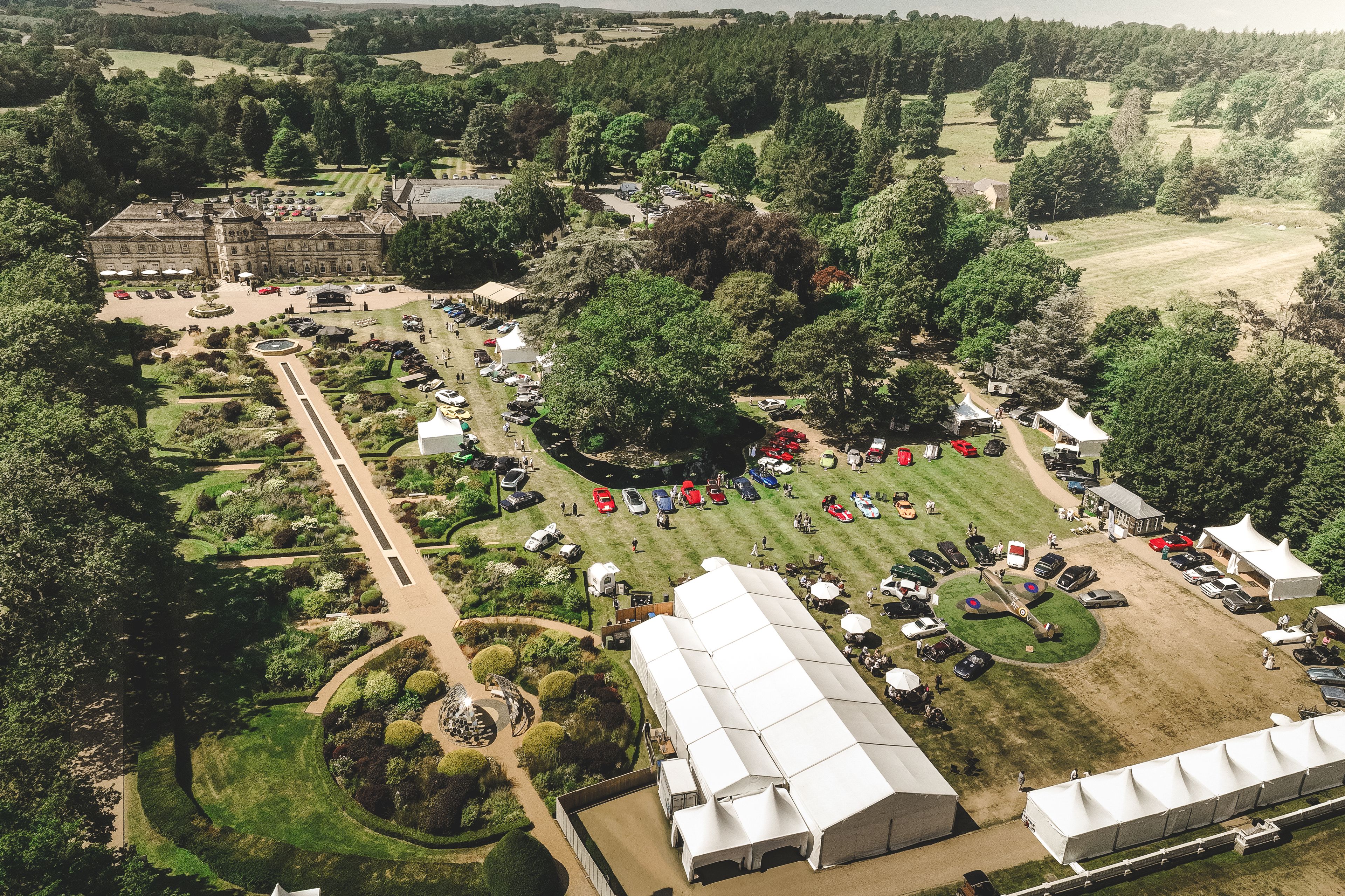
At Grantley Hall in July 2027, Yorkshire Elegance celebrates the marque’s eightieth year as one of the two feature anniversaries of its 2027 edition, alongside a century of the 1000 Miglia.
The Concours has a class for Classic Ferraris over 40 years old, and a special display brings together the “F” cars: the 288 GTO, F40, F50, Enzo, LaFerrari and F80. Owners and experts give feature presentations across both show days.
Yorkshire Elegance is organised by The Fast Lane Club. Ferrari, the Prancing Horse device and associated marks are trademarks of Ferrari S.p.A.
Picture credits
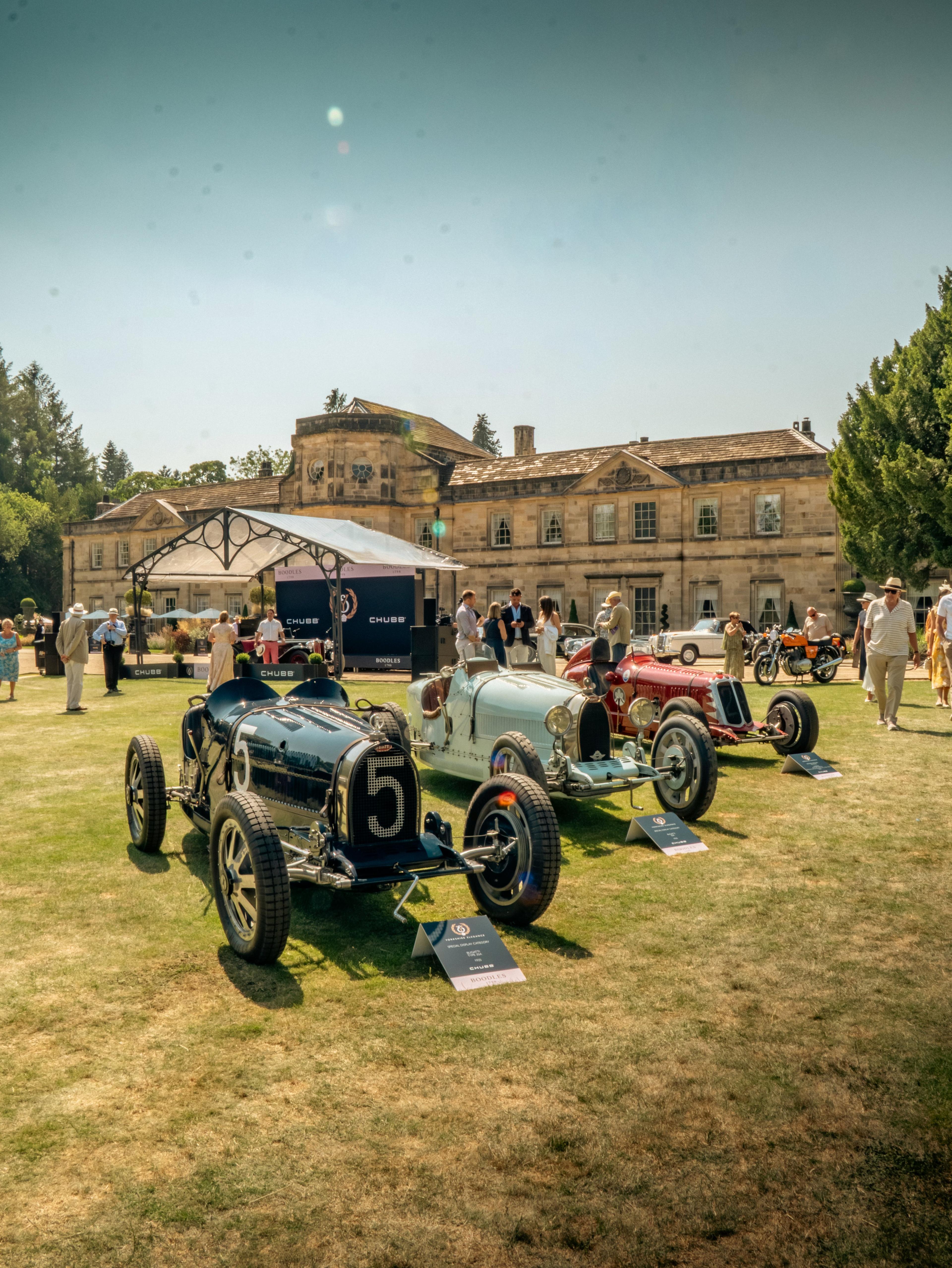
The photographs of the cars, the 1947 portrait and the archive pictures of the early years and great victories are freely licensed images from Wikimedia Commons, credited here and beside each one. The F40, the 166 MM before the Hall and the gallery are from Yorkshire Elegance at Grantley Hall.
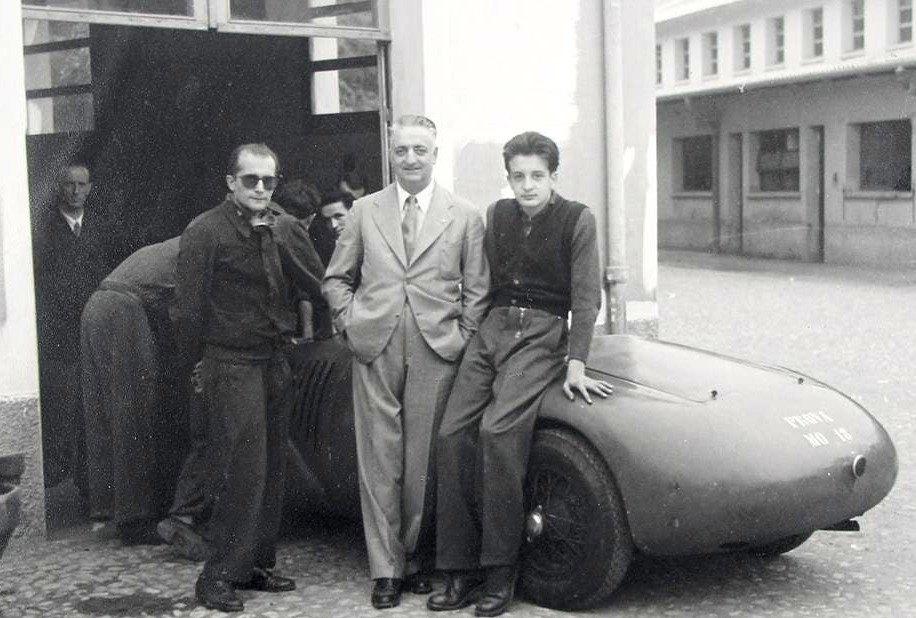
- Enzo Ferrari (centre) with his son Dino (right) and Nando Righetti beside the 125, 1947Unknown photographer · Public domain · Wikimedia Commons
- 1947 125 S: A 125 S at the Petersen Automotive Museum, Los AngelesTaurusEmerald · CC BY-SA 4.0 · Wikimedia Commons
- 1948 166 MM: The 1949 Le Mans-winning 166 MM, Musée des 24 Heures du MansAlf van Beem · Public domain · Wikimedia Commons
- 1957 250 Testa Rossa: A 250 Testa Rossa with pontoon front wings, IAA Frankfurt, 2019Johannes Maximilian · CC BY-SA 4.0 · Wikimedia Commons
- 1962 250 GTO: A 250 GTO in period racing coloursCalreyn88 · CC BY-SA 4.0 · Wikimedia Commons
- 1964 275 GTB: A 1966 275 GTB at the Greenwich ConcoursMr.choppers · CC BY-SA 3.0 · Wikimedia Commons
- 1967 330 P4: A 330 P4 on display, a 499P beside itCharles from Port Chester, New York · CC0 · Wikimedia Commons
- 1968 365 GTB/4 ‘Daytona’: A 365 GTB/4 at Bonhams, Goodwood, 2024Calreyn88 · CC BY-SA 4.0 · Wikimedia Commons
- 1975 308 GTB: A 1977 308 GTB at Auto e Moto d’Epoca, BolognaCharles from Port Chester, New York · CC BY 2.0 · Wikimedia Commons
- 1984 GTO (288 GTO): A GTO, better known as the 288 GTOGTHO · CC BY-SA 4.0 · Wikimedia Commons
- 1995 F50: An F50 at the London ConcoursMrWalkr · CC BY-SA 4.0 · Wikimedia Commons
- 2002 Enzo Ferrari: An Enzo Ferrari in yellowAndrew Basterfield · CC BY-SA 2.0 · Wikimedia Commons
- 2013 LaFerrari: LaFerrari at the Ferrari museumMatyáš Solařík · CC BY-SA 4.0 · Wikimedia Commons
- 2019 SF90 Stradale: An SF90 Stradale in MayfairCalreyn88 · CC BY 4.0 · Wikimedia Commons
- 2023 499P: The winning No. 51 499P at Le Mans, 2023Wolkenjaeger · CC BY-SA 4.0 · Wikimedia Commons
- 2024 12Cilindri: A 12Cilindri in silverCalreyn88 · CC BY 4.0 · Wikimedia Commons
- 2024 F80: An F80 at Maranello, in front of the Centro StileAsgaw · CC BY 4.0 · Wikimedia Commons
- 2026 Luce: The Luce at Pebble Beach, 2026Banhada · CC BY 4.0 · Wikimedia Commons
- 1920 – 1924: Enzo Ferrari in an Alfa Romeo RL at the Coppa Acerbo, 1924Unknown photographer · Public domain · Wikimedia Commons
- 1932: Eugenio Siena in a Scuderia Ferrari Alfa Romeo 8C 2300, 1932Unknown photographer · Public domain · Wikimedia Commons
- 1933 – 1937: Tazio Nuvolari at the finish of the 1933 Mille Miglia, Scuderia Ferrari Alfa RomeoAgence Rol · Public domain · Wikimedia Commons
- 28 April 1940: The Auto Avio Costruzioni 815 of 1940Buch-t · Public domain · Wikimedia Commons
- 14 July 1951: González’s 375 F1 chasing Farina’s Alfa Romeo at the French Grand Prix, two weeks before SilverstoneUnknown photographer · Public domain · Wikimedia Commons
- 1952 – 1953: Alberto Ascari takes the flag at Zandvoort in a Ferrari 500Joop van Bilsen / Anefo · CC0 · Wikimedia Commons
- 1960 – 1965: A 250 LM, the model that won Le Mans in 1965Rutger van der Maar · CC BY 2.0 · Wikimedia Commons